Beat ATS Filters for Remote Job Applications: 5 Time Saving Fixes
Make your resume and application explicitly “remote ready” before you send another one out. That means a visible remote signal near your contact info, time zone and overlap hours stated plainly, and language pulled straight from the posting. Tailor every application to match, and consider a tool like Easy-cv to speed up the tailoring and keep every submission tracked so nothing slips through.
TL;DR:
- Remote signals on your contact line and a dedicated remote toolkit section are crucial for passing quick employer scans and demonstrating your remote work readiness.
- Filtering job sources carefully and tailoring each application to include exact keywords, tools, and measurable remote achievements improves your chances of standing out and avoiding scams.
- Clear labeling of remote roles in your work history and structured, keyword-rich cover letters help both ATS systems and hiring managers quickly verify your suitability for remote positions.
- Tracking applications systematically and following up within 5 to 14 days increases response rates, while focusing on quality over quantity yields better results.
- Using AI-assisted tools for resume tailoring, job matching, and language translation speeds up the application process and improves ATS compliance across borders.
Table of Contents
- How Do You Make a Resume Look Remote-Ready?
- Where Should You Look for Legitimate Remote Job Listings?
- How Do You Tailor a Resume and Cover Letter for Remote Hiring Managers?
- What’s the Best Way to Track Applications and Follow Up?
- What Legal and Tax Issues Come With Remote Work?
- How Do You Prepare for a Remote Job Interview?
- What Do Employers Actually Expect From Remote Employees?
- What Are the Biggest Challenges in Applying to Remote Jobs?
- Using Integrated Tools to Speed Up Tailored Applications
- Get Your Applications Remote-Ready With Easy-cv
- Sources
- FAQ
How Do You Make a Resume Look Remote-Ready?
Recruiters hiring for remote roles move fast, and they’re looking for a handful of specific signals before they read your work history. Getting those signals in the right place, in the right format, matters more than most job seekers realize.
Start with your contact line. Right under your name and email, add something like “Remote · Chicago, IL · overlaps 9am to 5pm ET.” That single line tells an applicant tracking system and a human reader that you understand what remote work requires: a location, a time zone, and hours that line up with the team’s schedule. Skip it, and you risk getting filtered out before anyone reads your bullet points.
Next, build a dedicated “Remote Toolkit” section, not just a buried skills line. List the specific platforms you use daily: Slack, Zoom, Notion, Jira, Asana, whatever applies. Then reference those same tools inside your achievement bullets, so they show up in context rather than as a disconnected list.
Compare these two lines:
- Weak: “Managed a team and improved project delivery.”
- Remote-optimized: “Led a 6-person distributed team across 3 time zones using Asana and Slack, cutting project turnaround by two weeks.”
The second version gives a hiring manager three things at once: remote context, tool fluency, and a measurable result. That formula (action, remote context, result) should drive every bullet you rewrite.
Formatting matters just as much as wording. Use a single-column layout, save as DOCX unless the posting specifically asks for PDF, and skip images, icons, and tables that most parsing software can’t read. Stick to standard fonts like Calibri or Arial.
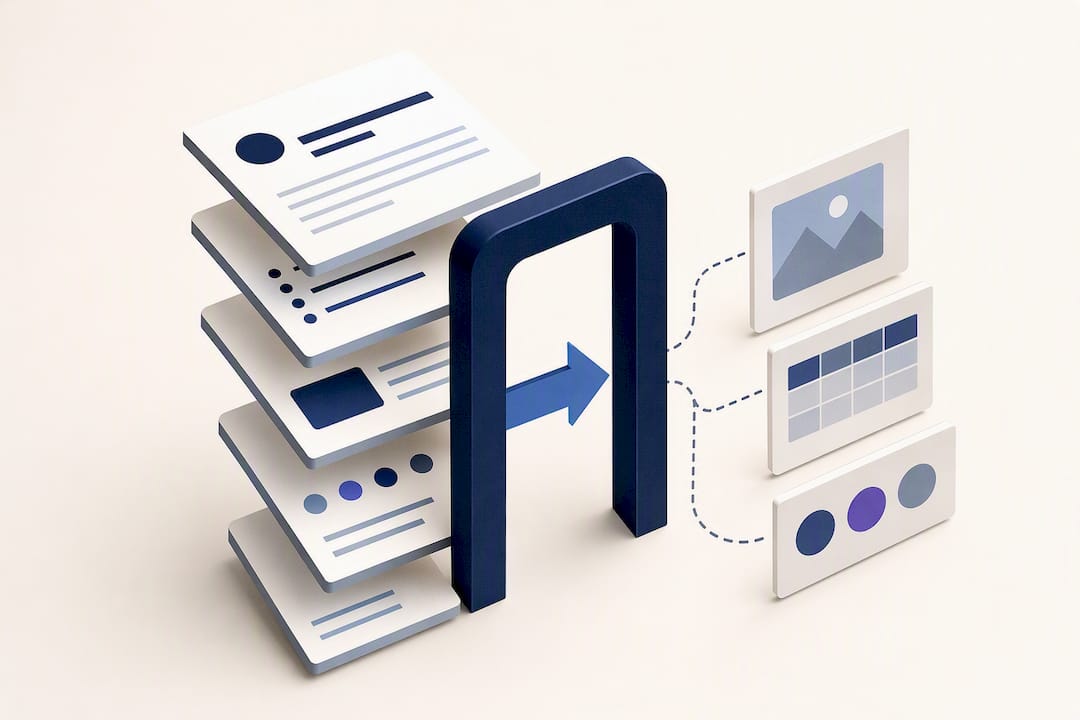
Remote postings pull in far more applicants than on-site roles, and recruiters often scan a remote resume in about 5 seconds before deciding whether to keep reading. That’s not much time to prove you understand distributed work, so the signals need to be immediate, not buried on page two.
Pro Tip: Label every past remote role explicitly, like “Product Manager — Remote (US, EST),” instead of just listing the company and city. It’s a small edit that removes any doubt about your experience.
Where Should You Look for Legitimate Remote Job Listings?
Not all “remote” listings are created equal, and some aren’t remote at all once you read the fine print. Knowing where to look, and what to filter for, saves hours of wasted applications.
Four source types cover most of what’s out there:
- Curated remote job boards that vet postings before publishing them, reducing scam risk.
- Large aggregators that pull thousands of listings from across the web, useful for volume.
- Company career pages, where you often find roles before they hit third-party boards.
- Niche boards built around a specific industry, like design, writing, or engineering.
FlexJobs screens listings before publishing, which cuts down on the fake “work from home” postings that flood general search results. We Work Remotely leans toward volume, with pay ranges and geography tags attached to most listings, and even traditional staffing firms like Robert Half now carry sizable remote job categories. Combining a curated source with a high-volume aggregator gives you both quality leads and enough raw options to stay busy.
Once you’re browsing, filter aggressively: remote-only, time zone or location tags, seniority level, posting date, and salary range where it’s listed. Watch for red flags, too. Vague pay ranges, upfront fees of any kind, and generic “work from home” copy that never mentions actual responsibilities are all signs to skip a listing entirely.
Resist the urge to mass-apply. Shortlist 3 to 5 high-fit listings a day and tailor each one carefully. As you read each posting, copy the exact requirements into a separate document. That list becomes your keyword bank for the tailoring step that comes next, and it’s far more useful than trying to remember phrasing from memory an hour later.
Pro Tip: If a listing says “remote” but lists a specific city with no mention of time zone flexibility, assume it’s hybrid or has hidden geographic restrictions until proven otherwise.
How Do You Tailor a Resume and Cover Letter for Remote Hiring Managers?
Tailoring for remote roles means proving fit on two fronts at once: passing the ATS scan and convincing a human that you’ll actually work well without a supervisor nearby. Here’s the sequence that covers both.
- Mirror the posting’s exact phrasing. If the job description says “async first” or “cross time zone collaboration,” and that’s genuinely true of your background, use those exact words. ATS software matches phrases, not just concepts.
- Label remote roles clearly in your work history. “Product Manager — Remote (US, EST)” tells both the parser and the reader what they need to know in three seconds.
- Write a three-paragraph cover letter. Paragraph one covers why remote work fits how you operate. Paragraph two gives one quantified remote achievement. Paragraph three states your availability and time zone overlap plainly.
- Name your files correctly. Use a format like FirstName_LastName_Role_Remote.docx, or PDF only if the posting specifically requests it.
- Run an ATS parse check before submitting. Paste your resume into a free parser tool and confirm your remote labels and tool names extract cleanly. If keywords get dropped, the formatting is the likely culprit, not the content.
Remote roles can pull in 5 to 10 times the applicants of a comparable on-site posting, which means the ATS ranking step often decides who a human ever sees. A resume that survives that filter still needs the human-facing proof: a specific number, a specific tool, a specific outcome. For more on structuring that proof, our resume and cover letter guide breaks down formatting choices in more depth.
Pro Tip: Keep a master document of every remote keyword you’ve collected from postings in your target role. Reuse the ones that are true for you instead of rewriting from scratch every time.
What’s the Best Way to Track Applications and Follow Up?
A simple spreadsheet beats a cluttered inbox every time, and the fields you track determine whether your follow-ups actually land.
Record at minimum: company, job title, posting URL, date applied, the key requirements you copied from the listing, the keywords you tailored toward, a contact name or email if you have one, and any time zone notes relevant to that application.
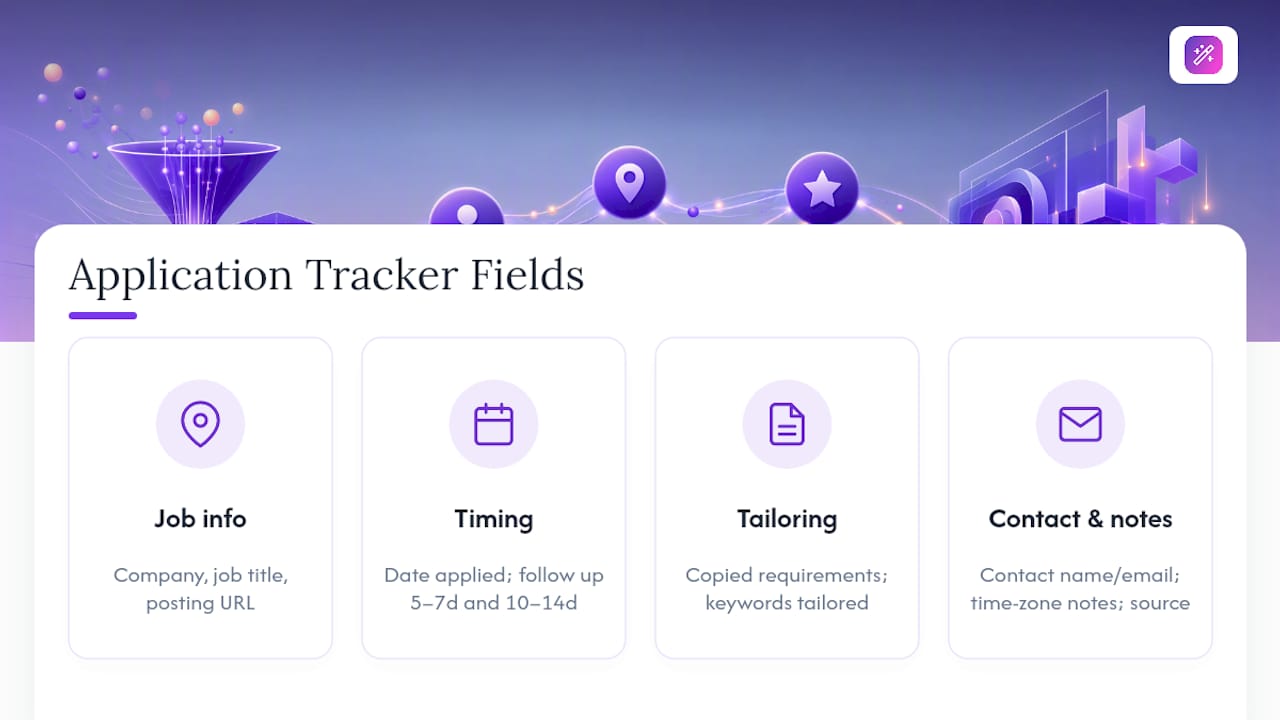
Follow-up timing matters more than most people think. Send a short, polite check-in around 5 to 7 days after applying. If there’s still no response, follow up again at the 10 to 14 day mark. After two or three attempts with no reply, stop. Continuing past that point reads as pressure, not persistence.
Keep follow-up messages brief, and add something new each time rather than just asking “any update?” A line like “I wanted to add that I’ve since led a similar async project” gives the recruiter a reason to reopen your application instead of just re-reading it.
Over time, track which sources produce interviews, not just applications. If curated boards convert better than aggregators, or if deeper tailoring correlates with more callbacks, shift your time accordingly. A built-in job tracker keeps all of this in one place instead of scattered across spreadsheets and email folders.
Pro Tip: Note the exact date and channel for every application. After a month, you’ll usually see one or two sources outperforming the rest by a wide margin.
What Legal and Tax Issues Come With Remote Work?
Where you physically work, not where the company is headquartered, usually determines which tax rules apply to you. If you’re a W-2 employee working remotely from a different state than your employer, you may owe state income tax in your resident state, and some states have reciprocity agreements that avoid double taxation while others don’t.
Freelance and contract remote work adds another layer. As a 1099 contractor in the United States, you’re responsible for self-employment tax and quarterly estimated payments, regardless of where the client is based. If you’re applying to roles with international companies, ask directly during the interview process how they classify remote workers in your country, since misclassification can create real tax exposure for both sides.
Cross-border remote work raises the stakes further. Working for a company based in another country while living in the U.S. can trigger visa, work authorization, and tax residency questions that vary significantly by country pair. None of this should stop you from applying broadly, but it’s worth asking a tax professional about your specific situation before accepting an offer that spans borders, rather than assuming the employer has already sorted it out. This applies just as much to freelance job applications as it does to full-time remote roles.
How Do You Prepare for a Remote Job Interview?
Video interviews test something on-site interviews never touch directly: how you present yourself through a screen, in a space you control. Treat the setup with the same seriousness as the answers you’ll give.
Test your camera and audio at least a day before, not five minutes prior. A wired internet connection beats Wi-Fi when it’s available, and a plain background with decent front-facing light removes distractions that pull attention away from what you’re saying. Sit somewhere quiet enough that a knock on the door or a barking dog doesn’t derail your answer mid-sentence.

Communication style shifts on video, too. Pause slightly longer before answering than you would in person, since video lag makes interruptions awkward for both sides. Look at the camera lens periodically, not just the screen, to simulate eye contact. Keep answers structured, since a rambling response is harder to follow over video than in a room.
Prepare one story that demonstrates self-management specifically, since that’s what remote interviewers are quietly screening for the entire time. A concrete example, like resolving a stalled project without a manager physically available to loop in, does more work than any adjective you could use to describe yourself.
What Do Employers Actually Expect From Remote Employees?
Availability expectations vary company to company, and clarifying them early avoids friction later. Some teams expect strict overlap hours, like 10am to 3pm in a shared time zone; others care only about output and let you set your own schedule. Ask directly in the interview which model applies, since guessing wrong creates real tension after you start.
Communication expectations run deeper than most candidates assume. Remote managers can’t see you working, so they rely on visible signals: prompt responses on Slack, clear written updates, and proactive flagging of blockers before they become deadline problems. Silence reads as a red flag far faster on a remote team than in an office where someone can just see you at your desk.
Productivity gets measured by output, not hours logged, on most well-run remote teams. That’s good news for candidates who work efficiently, but it also means vague answers about “staying busy” won’t land in an interview. Come prepared to describe specific outcomes you’ve delivered and how you tracked your own progress without someone checking in constantly.
What Are the Biggest Challenges in Applying to Remote Jobs?
The applicant pool is the first hurdle. Remote postings routinely draw several times more applications than equivalent on-site roles, which means a generic resume gets buried fast, regardless of how qualified you actually are.
The second challenge is proving self-management on paper, something a resume format was never really built to do. Soft-skill words like “independent” or “self-starter” carry almost no weight with recruiters or ATS software; a quantified example of managing your own deadlines carries far more.
Fake listings and low-quality postings waste real time, especially on general job search sites where anyone can post without verification. Sticking to curated boards, vetted aggregators, and direct company career pages cuts that risk substantially.
Finally, volume fatigue is real. Applying to dozens of roles a week with shallow tailoring produces worse results than applying to a handful with real customization. Slowing down and tailoring five applications well tends to outperform blasting out twenty, and a structured job search approach makes that kind of focus easier to sustain over weeks rather than days.
Using Integrated Tools to Speed Up Tailored Applications
. What I’ve seen repeatedly is that tailoring fatigue, not lack of qualification, is what kills most remote job searches by week three.
Templates and AI-assisted tailoring exist to handle the repetitive 80% of the work: reformatting, keyword matching, and AI productivity workflows that save time with consistent ATS structure… A job tracker built into the same workflow removes the mental overhead of remembering what you sent where.
Automation earns trust for volume applications and standard roles. For a highly senior position or an unusual job spec, override it and write the pitch yourself…
— Andras
Get Your Applications Remote-Ready With Easy-cv
Certain platforms are built to support the workflow this article just walked through: tailoring fast without sacrificing the quality that gets you past an ATS. Instead of manually rewriting bullets, renaming files, and tracking spreadsheets across a dozen tabs, you can use AI-assisted resume tailoring, ATS-friendly templates, and a built-in job tracker in one place.
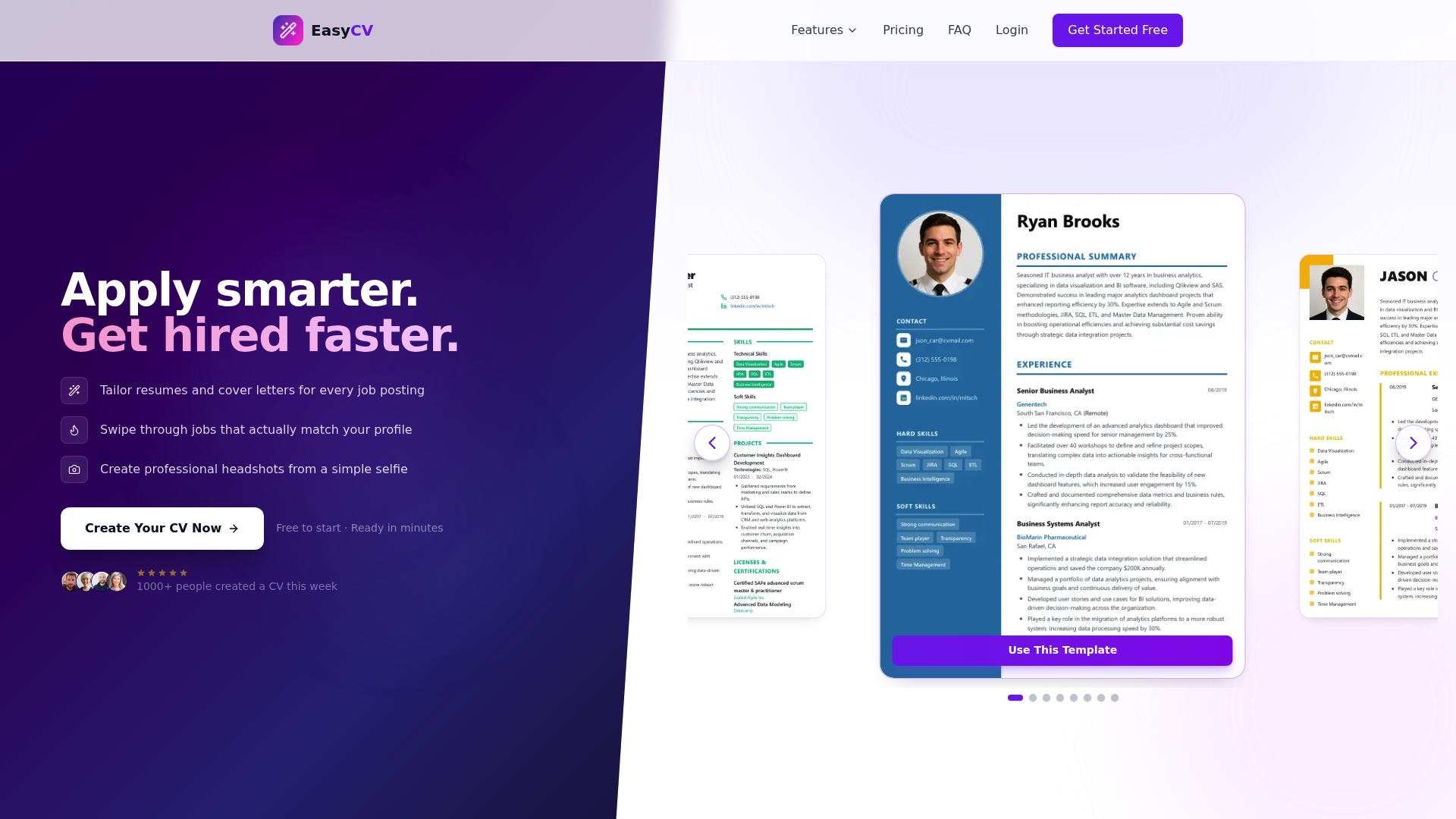
The Job Matcher swipes through listings and scores them against your existing resume, so you spend your time on the strongest matches instead of scrolling endless boards. If you’re applying to roles across borders, the CV translator handles more than 30 languages without breaking your formatting. Applying for freelance job applications across time zones works the same way: tailor once, translate if needed, track everything centrally.
Start by importing your current resume, run it through the tailoring tools against one real posting, and see what the ATS check catches that you missed manually.
Sources
- Resume for Remote Jobs (2026), Beat a 1,000-Applicant Pool
- FlexJobs: Best Work From Home Jobs, Online Jobs & More
FAQ
What’s the easiest remote job to get hired for?
Entry-level remote customer service, virtual assistant, and data entry roles tend to have the lowest barrier to entry since they require fewer specialized credentials, though they also attract high applicant volume, so tailoring still matters.
What is the best site to apply for remote jobs?
There’s no single best site. Curated boards like FlexJobs reduce scam risk, while high-volume aggregators like We Work Remotely offer broader reach; combining both with a tool like Easy-cv to tailor each application tends to produce the strongest results.
How can I make $2,000 a week working from home?
Reaching that income level from home usually requires either a senior specialized role, a well-established freelance or consulting practice, or multiple income streams, and it varies widely by skill set and industry rather than following one fixed path.
Does Amazon really pay people to work from home?
Yes, Amazon lists genuine work-from-home and remote roles across customer service and corporate functions, though many postings include specific state or time zone requirements worth checking before applying.