Job Search Tips 2026: What Actually Gets You Hired
Effective job searching in 2026 is defined by targeted, high-quality applications combined with a strong online presence and deliberate networking. The old approach of blasting out dozens of generic resumes no longer works. AI screening tools now reject candidates before a human ever reads their application, and ghost job listings waste thousands of hours each week. The best job search tips 2026 professionals are using share one thing in common: specificity beats volume every time. Tools like LinkedIn, Easy-cv, and Grammarly exist to help you work smarter, not harder.
1. Why targeted applications beat mass applying in 2026
The single most effective shift you can make is applying to fewer jobs with more care. 10 tailored applications weekly outperform 50 generic submissions in securing interviews. That finding flips the conventional wisdom that more applications equal more chances.
Mass applying creates a false sense of productivity. You spend hours reformatting the same resume, copying and pasting cover letters, and tracking down job IDs. The result is a low conversion rate and a lot of frustration. Hiring managers can spot a generic application immediately, and ATS filters catch keyword mismatches before a human even sees your name.
The better approach is to build a target list of 25–40 specific companies you genuinely want to work for. Research their teams, products, and recent news. Then write each application as if it were the only one you are sending that week.
- Identify 3–5 roles per company that match your skills
- Mirror the exact language from each job description in your resume
- Reference specific company initiatives or values in your cover letter
- Track every application with a job tracker to avoid duplicate submissions
Pro Tip: Before you apply anywhere, spend 20 minutes reading the company’s LinkedIn page, recent press releases, and Glassdoor reviews. That research pays off in every sentence you write.
2. How to optimize your LinkedIn profile for recruiter visibility

Optimized LinkedIn profiles generate more inbound recruiter interest than active applying alone. That means your profile is working for you even when you are not. The shift from active applying to passive discoverability is one of the most underused best job search strategies 2026 professionals have available.
A complete, keyword-rich LinkedIn profile ranks higher in recruiter searches. Here is what that looks like in practice:
- Current headshot. A professional LinkedIn headshot increases profile views significantly. Use a clean background, good lighting, and a confident expression.
- Targeted headline. Do not use your job title alone. Write a headline that includes the role you want and two or three relevant skills. Example: “Product Manager | SaaS Growth | B2B Strategy.”
- Detailed experience section. Each role should include accomplishments with numbers, not just duties. “Reduced churn by 18%” beats “Managed customer success.”
- Skills endorsements. Add the exact skills listed in your target job descriptions. Recruiters filter by these terms.
- Open to Work setting. Turn on the “Open to Work” feature visible to recruiters only. This signals availability without broadcasting it to your current employer.
Pro Tip: Use AI writing tools to refine your LinkedIn summary. Paste your current summary and target job description into a tool like Grammarly or an AI assistant, then ask for a tighter, keyword-aligned version.
3. Networking, referrals, and the hidden job market
Around 70% of jobs are never publicly posted. They are filled through referrals, internal moves, and direct outreach before a listing ever goes live. That single fact makes networking the highest-leverage activity in any job search.
Referrals convert to offers at roughly 4 times the rate of cold applications. A warm introduction from someone inside the company changes how your resume is read and who reads it. Most job seekers spend the majority of their time on job boards and almost none on building relationships. That is the wrong ratio.
- Identify 10–15 people currently working in roles you want
- Send a short, specific message requesting a 20-minute conversation, not a job
- Ask about their day-to-day work, team culture, and what skills they value most
- Follow up with a thank-you note and stay in touch quarterly
Weak ties matter more than most people realize. A former colleague, a college classmate, or even a LinkedIn connection you have never met in person can become a referral advocate. The key is making the relationship genuine before you need anything from it.
Pro Tip: Spend at least 60% of your weekly job search time on networking activities: outreach messages, informational calls, and follow-ups. The job board application guide from Easy-cv covers how to balance both channels effectively.
4. Recognizing and avoiding ghost jobs
Ghost jobs are real listings that no longer represent active hiring. They are postings older than 45 days or repeated listings that companies refresh without intent to hire. Applying to ghost jobs wastes your best tailoring effort on roles that will never move forward.
Signs of a ghost job include a posting date more than six weeks old, identical listings reposted under slightly different titles, and job descriptions that are vague or copied from a previous cycle. The fix is simple: verify before you invest time.
| Indicator | What it means | What to do |
|---|---|---|
| Posting older than 45 days | Likely stale or on hold | Contact the recruiter directly to confirm status |
| Same listing reposted weekly | Auto-refresh, not active search | Check LinkedIn for recent team activity |
| No named hiring manager | Low engagement from company | Search for the team lead and reach out directly |
| Vague or generic description | Template posting, not urgent | Ask a connection inside the company for context |
Internal moves offer a faster alternative. Internal job moves take 2–4 weeks to fill, compared to 6–10 weeks for external hires. They also tend to come with better compensation alignment because the company already knows your value. If you are currently employed, your internal network is one of your strongest job search assets.
5. How to prepare for interviews and negotiate your salary
Interviewers form key impressions within the first seven minutes of a conversation. A clear, confident 90-second introduction that covers who you are, what you do best, and why you want this specific role sets the tone for everything that follows. Most candidates waste those minutes on rambling career histories.
Treat the interview as a two-way evaluation. Ask specific questions about how the role was designed, what success looks like in the first 90 days, and how the manager prefers to give feedback. These questions signal that you think like a high performer, not just a candidate who wants a paycheck.
- Prepare three specific stories using the STAR format: Situation, Task, Action, Result
- Research the company’s recent earnings, product launches, or leadership changes
- Ask about team structure and decision-making authority, not just perks
- Send a follow-up email within 24 hours that references a specific moment from the conversation
Salary negotiation deserves its own focus. Wait for a written offer before discussing numbers. Once you have it, anchor your counteroffer to documented market data from sources like the Bureau of Labor Statistics, LinkedIn Salary, or Glassdoor. A single well-timed negotiation conversation can add thousands of dollars to your annual compensation. That is the highest return activity relative to the time it takes.
Pro Tip: Never give a salary number first. If asked early in the process, say you would like to learn more about the full scope of the role before discussing compensation. That answer is professional and buys you time.
6. Using AI tools the right way in 2026
AI tools are essential in 2026 but only when used to customize content, not to generate generic mass templates. The difference between a good AI-assisted application and a bad one is whether the output sounds like you wrote it for this specific job. Recruiters can spot AI-generated filler instantly.
The right use of AI is to speed up research and refinement. Use it to identify keywords from a job description, rewrite bullet points to match the role’s language, and check your resume for ATS compatibility. Easy-cv’s AI writing assistant does exactly this: it generates and refines resume content based on the specific job you are targeting, not a generic template. That distinction matters when 66% of job seekers report at least one AI rejection in their recent search.
The goal is a resume that reads like a human wrote it with precision. AI handles the heavy lifting. You provide the judgment about what to keep, cut, and emphasize.
Key takeaways
The most effective job hunting advice 2026 professionals can act on is this: fewer, better applications combined with consistent networking and a keyword-optimized LinkedIn profile will outperform any high-volume approach.
| Point | Details |
|---|---|
| Quality over quantity | 10 tailored applications weekly outperform 50 generic ones in interview conversion. |
| LinkedIn as a passive channel | A complete, keyword-rich profile attracts recruiters without active applying. |
| Networking drives referrals | Referrals convert to offers at 4 times the rate of cold applications. |
| Ghost job detection saves time | Verify postings older than 45 days before investing tailoring effort. |
| Negotiate after the written offer | Anchoring to market data post-offer maximizes compensation outcomes. |
What I have learned after watching thousands of job searches fail the same way
Most job seekers I have observed make the same mistake: they treat the job search like a numbers game. They apply to 80 roles in a month, hear nothing, and conclude the market is broken. The market is not broken. Their approach is.
The shift that actually works is uncomfortable because it feels slower. Sending 10 applications instead of 50 feels like doing less. Spending an hour on one cover letter instead of five feels inefficient. But the data is clear, and so is the pattern I have seen play out repeatedly. Targeted effort produces results that volume never does.
The other thing I would push back on is the idea that networking is only for extroverts or people with large existing networks. The most effective networkers I have seen start with just 10 people and a genuine curiosity about their work. They ask good questions, follow up consistently, and build trust before they need anything. That is a skill anyone can develop.
Ghost jobs are the silent killer of job search momentum. I have watched candidates spend three weeks tailoring a perfect application for a role that was never going to be filled. Always verify. One LinkedIn message to a recruiter takes five minutes and saves you hours.
Finally, negotiate every offer. Every single one. The worst outcome is that the number stays the same. The best outcome is thousands of dollars added to your base salary, which compounds in every future raise and job offer. There is no good reason to skip it. Check out proven ways to improve your search for more tactics that hold up in practice.
— Andras
Easy-cv makes targeted applications faster and more effective
Tailoring every application takes time. Easy-cv cuts that time significantly without cutting the quality.
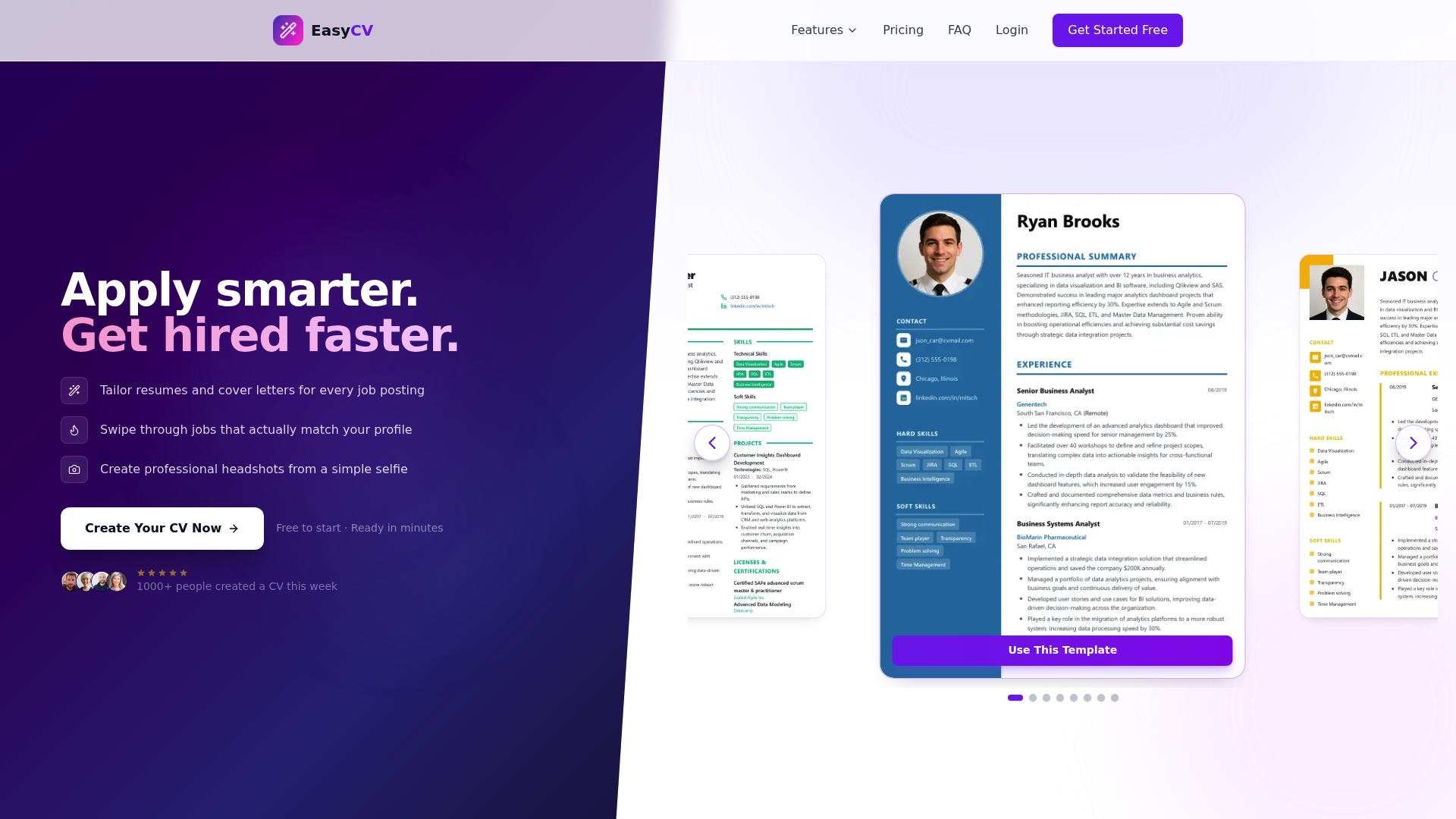
Easy-cv aggregates over 10 million job opportunities per month from all major job boards, with new listings available within minutes of posting. Its AI writing assistant tailors your resume and cover letter to each specific role, matching keywords and tone to the job description. The built-in job tracker keeps your search organized so nothing slips through. For job seekers who want ATS-compatible templates, an AI headshot generator, and support for 30+ languages, Easy-cv covers the full application workflow in one place. Build your AI-powered resume and start applying with the kind of precision that actually gets responses. You can also explore all features to see exactly what the platform offers.
FAQ
How many jobs should I apply to per week in 2026?
Research shows 10 targeted applications per week outperform 50 generic ones. Focus on quality, not volume.
What is a ghost job and how do I spot one?
A ghost job is a listing older than 45 days or a reposted role with no active hiring intent. Contact the recruiter directly to verify status before applying.
How much does LinkedIn matter for job searching in 2026?
LinkedIn profile completeness and keyword optimization directly improve your ranking in recruiter searches. A strong profile generates inbound opportunities without active applying.
When should I bring up salary in an interview?
Wait until you have a written offer before discussing compensation. Anchoring your counteroffer to market data from sources like LinkedIn Salary or Glassdoor gives you the strongest negotiating position.
Does networking really outperform job boards?
Referrals convert to offers at roughly 4 times the rate of cold applications, and 70% of roles are never publicly posted. Networking consistently outperforms job board applications for interview conversion.