Job Search Automation Explained: Your 2026 Guide
Job search automation is the practice of using AI-powered tools and structured workflows to handle job discovery, resume tailoring, and application preparation at scale, while keeping a human in control of final submission. Tools like ChatGPT, Claude, Jobscan, and LazyApply have made this approach accessible to any professional with a laptop and a job to find. The core functions break into three areas: discovering relevant roles across multiple platforms, tailoring your resume and cover letter to each posting, and submitting applications with a manual review step before anything goes out. This guide covers how the process works technically, what risks to watch for, and the best practices that separate effective automation from the kind that gets you blacklisted.
How does job search automation work?
Job search automation operates as a pipeline. Each stage handles one task, passes its output to the next, and the whole system runs faster than any manual process could. Understanding the architecture helps you decide where to automate and where to stay hands-on.
Here is how a well-built pipeline runs:
- Job scraping. Automated tools pull listings from applicant tracking systems like Greenhouse and Lever, plus aggregators like LinkedIn. A repeatable workflow with a job tracker at its center keeps everything organized from the start.
- Filtering and scoring. A language model or keyword engine scores each listing against your target role criteria. This cuts a feed of hundreds of postings down to the 20 or 30 worth your attention.
- Resume tailoring. An LLM like GPT-4 or Claude reads the job description and pulls relevant bullet points from your master career database to build a matched resume draft. This is where AI resume writing tools add the most measurable value.
- Cover letter and form filling. Automation drafts a cover letter and pre-fills standard application fields. The system stops before submission for your review.
- Manual review and submit. You read the tailored materials, adjust anything that feels off, and click submit yourself. This step is non-negotiable.
- Tracking and metrics. Every application logs to a spreadsheet or tracker with date, role, company, and outcome. You review this data weekly to spot patterns and improve your targeting.
Pro Tip: Build your master career database before you automate anything. A detailed record of every role, project, metric, and skill you have ever held gives your LLM the raw material it needs to write genuinely tailored content instead of generic filler.
The full automation pipeline described by practitioners using tools like n8n includes PDF resume generation, autofill, and a hard stop before submission. That stop is what keeps the system from becoming a liability.

What are the benefits and risks of automated job searching?
The case for automating your job search is real, but so are the ways it can go wrong. Both sides deserve honest treatment.
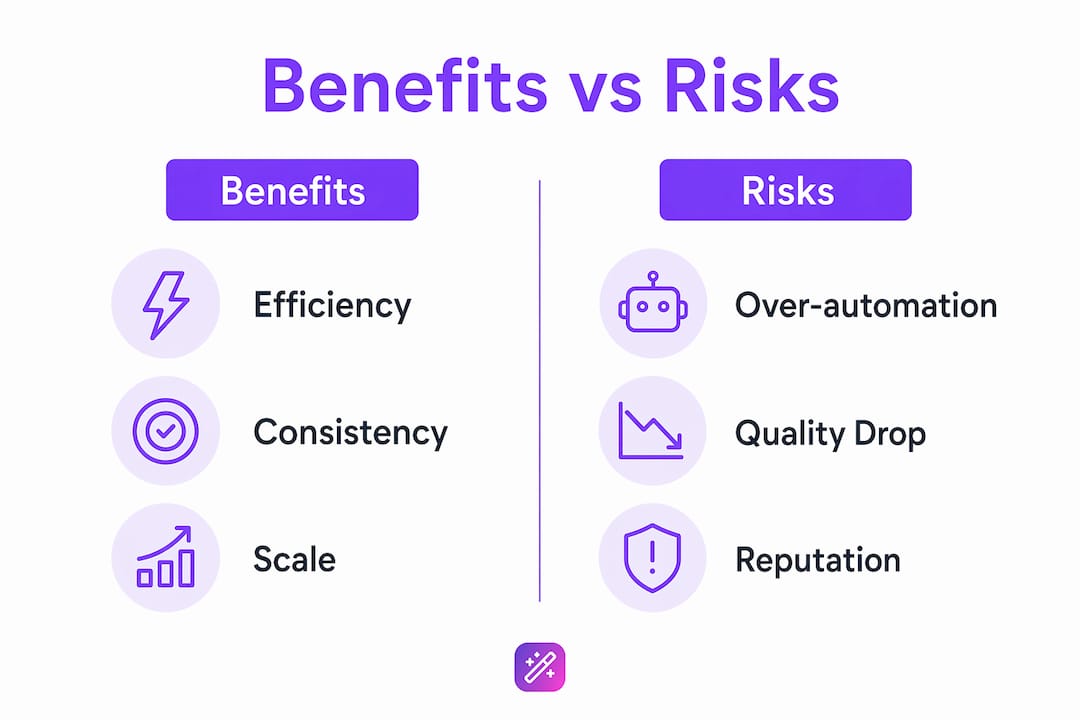
The benefits:
- Volume with precision. Automation lets you process far more listings than manual searching allows, then filter down to only the best matches. You apply to more relevant roles in less time.
- Consistent tailoring. Every application gets a resume and cover letter matched to that specific job description, which improves your match rate with automated resume screening systems.
- Reduced repetitive work. Form filling, job board browsing, and cover letter drafting are time sinks. Automation handles them so you can focus on interview prep and networking.
- Better tracking. A structured pipeline forces you to log every application, which most manual job seekers never do. That data tells you what is working.
The risks:
- “Spam cannon” behavior. Sending hundreds of low-quality applications damages your reputation with recruiters and ATS systems. Practitioners recommend targeting 20 to 50 well-matched roles daily with manual review, not mass blasting.
- Loss of personalization. Fully automated submissions on competitive or senior roles read as generic. Hiring managers notice.
- Legal and ethical exposure. Automation tools that score or filter candidates can carry disparate impact risks under Title VII and EEOC guidance, even when used by job seekers interacting with employer systems.
- Privacy concerns. Some platforms use third-party consumer data to generate opaque applicant scores, creating risks you may not be aware of when you sign up.
Pro Tip: Never use zero-click or fully automated submission on roles you genuinely want. Save automation for the discovery and drafting stages, and treat every final submission as a deliberate choice.
What legal and ethical considerations must job seekers know?
Most articles on job application automation focus entirely on the employer side of the law. That misses something important: the tools you use as a job seeker interact with employer systems that carry their own legal obligations, and understanding those obligations protects you.
Here is what the current legal framework looks like:
- ADA compliance. Under the Americans with Disabilities Act, hiring AI must not screen out qualified applicants with disabilities. If an employer’s automated system rejects your application because of a disability-related gap or accommodation need, that employer has a legal problem. Knowing this gives you grounds to request a review.
- Title VII and disparate impact. The EEOC has clarified that selection procedures with adverse impact require business necessity justification. The four-fifths rule used to measure disparate impact is sometimes insufficient, and employers must actively validate and mitigate bias in their AI tools.
- Employer liability. Employers cannot hide behind their vendors. Liability persists with AI-assisted decisions, and “the algorithm did it” is not a legal defense. This means employers have strong incentives to audit their tools, which benefits applicants.
- FCRA and consumer data. Some AI hiring tools use third-party consumer data to score applicants, creating obligations under the Fair Credit Reporting Act. If a tool uses data about you to make an employment decision, you may have rights to review and dispute that data.
- State disclosure laws. Connecticut Senate Bill 5 and similar emerging state laws require employers to notify candidates when algorithmic systems are used in hiring and to disclose the data sources behind those decisions. More states are moving in this direction.
“Employers remain liable for discriminatory hiring outcomes despite using third-party AI tools. ‘The AI algorithm did it’ is not a defense.” — KJK Legal Analysis, 2026
As a job seeker, your practical takeaway is this: if you believe an automated system rejected you unfairly, you have more legal recourse than most people realize. Document your applications, note which platforms use AI screening, and know that the regulatory environment is shifting in your favor.
What are the best practices for automating your job search?
Effective job search automation is not about running the most sophisticated pipeline. It is about building a workflow you can sustain, review, and improve over time. These practices separate productive automation from the kind that wastes your time or hurts your chances.
- Build a human-reviewed workflow from day one. Use a job tracker, an LLM for job description analysis, a resume match check, and a manual review step before every submission. This gold-standard approach prevents the errors that fully automated pipelines produce.
- Maintain a master career database. Store every role, project, metric, and skill in a structured document. Your LLM draws from this to tailor each application with real specifics rather than generic language.
- Use specialized tools for organization. Job trackers like Teal and Huntr keep your pipeline visible. Resume matching tools like Resume-Matcher score your resume against a job description before you apply. These tools complement each other rather than overlap.
- Avoid mass auto-apply on roles that matter. Use automation for discovery and drafting. Submit manually on any role where the company, team, or compensation is genuinely important to you.
- Prepare interview cheat sheets as you apply. Log the key requirements of each role at application time. When the interview call comes two weeks later, you will have a ready reference instead of scrambling to re-read the posting.
- Review AI-generated outputs regularly. Automation quality degrades if you never audit it. Set a weekly review of five to ten recent outputs to catch patterns like repeated phrases, inaccurate claims, or poor keyword matching.
Here is how the two main approaches compare:
| Approach | Best for | Key risk |
|---|---|---|
| Fully manual applications | Senior or highly competitive roles | Time-intensive; limits volume |
| Human-reviewed automation | Mid-level roles at scale | Requires discipline to maintain review step |
| Fully automated submission | Not recommended for any role | Reputation damage; low quality; legal exposure |
The middle row is where most professionals should operate. You can explore job search strategies that integrate automation with networking and direct outreach for the strongest overall results.
Key takeaways
Job search automation works best as a human-reviewed pipeline that handles discovery and drafting while leaving final submission decisions to you.
| Point | Details |
|---|---|
| Define your pipeline first | Map each stage from scraping to submission before choosing any tools. |
| Human review is non-negotiable | Always read and approve tailored materials before submitting any application. |
| Legal protections exist for applicants | ADA, Title VII, and FCRA give you rights when AI screening is used against you. |
| Quality beats volume | Targeting 20 to 50 well-matched roles with reviewed applications outperforms mass blasting. |
| Track everything | Logging every application creates the data you need to improve targeting over time. |
What I have learned from watching automation go wrong
Most job seekers who try automation fall into one of two traps. The first is over-engineering: spending three weeks building a perfect pipeline instead of applying to jobs. The second is under-reviewing: letting the system run without checking outputs until a recruiter calls to ask why the resume says “Senior Engineer” for a role that requires five years of management experience.
The human-in-the-loop principle is not a compromise. It is the actual point. AI tools are genuinely good at pattern matching, keyword extraction, and drafting. They are not good at knowing that a particular company values culture fit over credentials, or that a specific hiring manager posted a note on LinkedIn about what they hate in cover letters. You know those things. The system does not.
I have also seen professionals ignore the legal dimension entirely, treating automation as a purely technical problem. That is a mistake. The regulatory environment around AI in hiring is moving fast. State disclosure laws, EEOC guidance, and FCRA litigation are all expanding the rights of applicants. Knowing this framework does not just protect you from bad outcomes. It gives you leverage when something goes wrong.
The tool landscape will keep changing. What will not change is the underlying principle: automation handles scale, you handle judgment. Build your workflow around that division and you will get more out of every tool you use.
— Andras
Take your job search further with Easy-cv
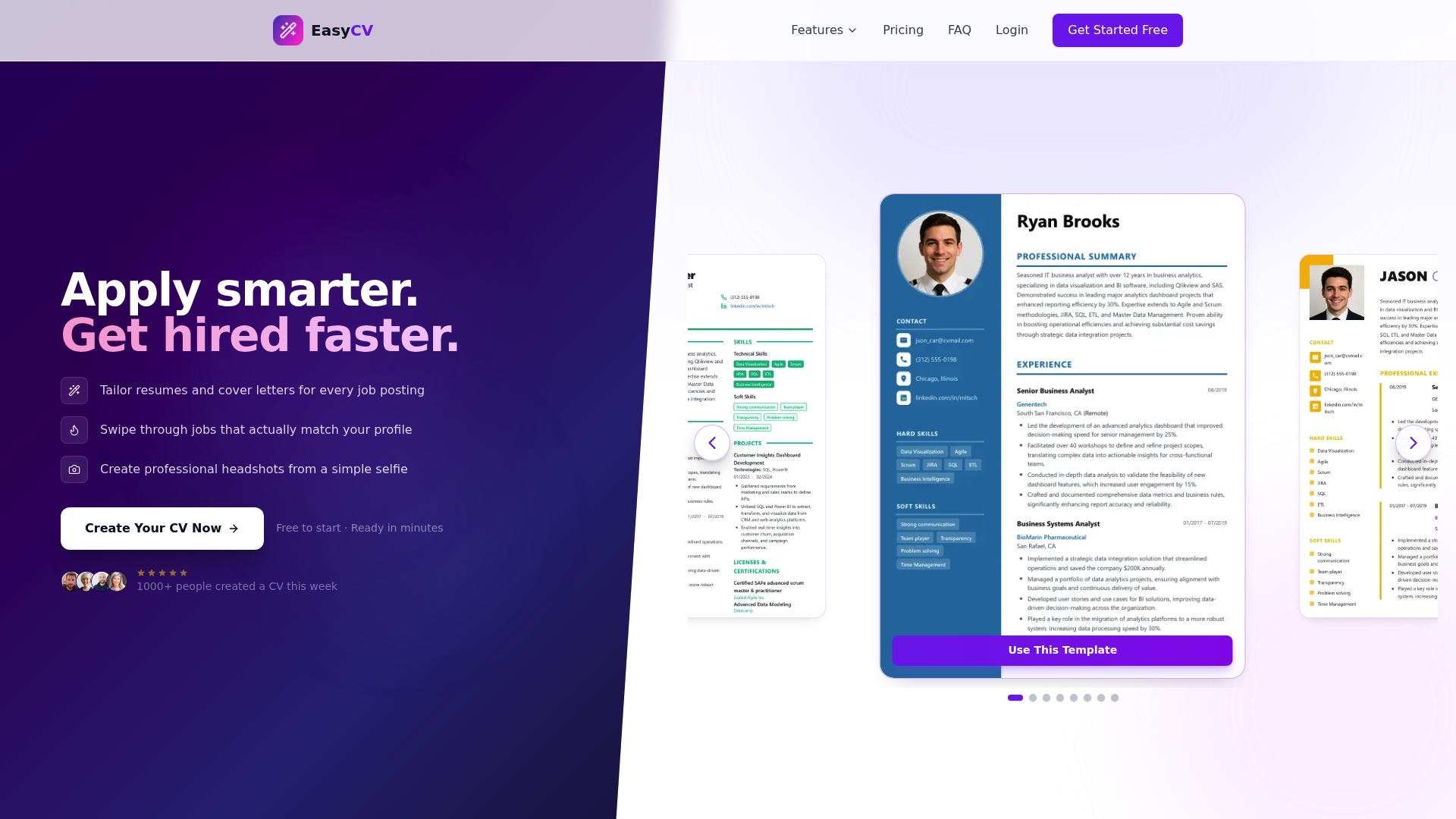
Easy-cv puts the entire job search workflow in one place, which makes it a natural fit for the kind of human-reviewed automation this article describes. The platform aggregates over 10 million job opportunities per month from all major boards, with new listings available within minutes. Its AI writing assistant tailors your CV and cover letter to each specific role, and the built-in job tracker keeps every application organized without a separate spreadsheet. For professionals who want to apply the best practices covered here without stitching together five different tools, the Easy-cv AI builder handles discovery, tailoring, and tracking in one place. You can also explore the full feature set to see how each component fits into your workflow.
FAQ
What is job search automation?
Job search automation is the use of AI tools and structured workflows to handle job discovery, resume tailoring, and application preparation at scale. The most effective setups include a manual review step before any application is submitted.
Why automate job applications at all?
Automation lets you process more relevant listings, produce consistently tailored resumes, and track every application without the time cost of doing each step manually. The efficiency gain is real when the workflow includes human review.
What is the biggest risk of automated job searching?
The “spam cannon” problem is the most common risk: sending high volumes of low-quality applications damages your reputation with recruiters and ATS systems. Practitioners recommend targeting well-matched roles with manual review rather than mass blasting.
Are there legal protections for job seekers when employers use AI screening?
Yes. The ADA, Title VII, and FCRA all apply to AI-assisted hiring decisions. Employers remain liable for discriminatory outcomes even when using third-party AI tools, and emerging state laws now require disclosure of algorithmic hiring systems.
What tools support a human-reviewed automation workflow?
Job trackers like Teal and Huntr handle organization, resume matching tools like Resume-Matcher score fit before you apply, and AI writing assistants like those in Easy-cv handle tailored drafting. The combination covers every stage of the pipeline without requiring you to build anything from scratch.