Track Job Applications in One Hour: 6 Step Setup and Templates

The fastest fix is a dedicated tracker or a simple template that ties every application to the exact resume and cover letter you sent. One central sheet or board beats scattered emails and browser tabs because it gives you a single pipeline, scheduled follow-ups, and no duplicate applications. Start with a copyable template or a free tracking tool today to begin identifying which roles need attention.
TL;DR:
- Using a dedicated job tracker centralizes application data, prevents duplicates, and provides clear visibility into each application’s stage and follow-up needs.
- Essential fields include job details, application date, current status, resume version, recruiter contact info, and next steps, with optional tags for better filtering.
- A simple spreadsheet, Notion, or Kanban board suffices for most users until volume exceeds 20 applications, after which automation becomes necessary for efficiency.
- Weekly routines involving sorting, follow-up, and metrics tracking improve follow-up success and help identify bottlenecks in the job search process.
- Linking resumes and cover letters directly within the tracker and using AI-powered tools like EasyCV streamline application tailoring and reduce disorganization.
Table of Contents
- Why Tracking Beats Unmanaged Spreadsheets and Scattered Notes
- What to Record for Every Application
- Templates and Layouts That Actually Work
- Setting Up a Job Application Tracker in Six Steps
- The Weekly Routine That Keeps Your Pipeline Moving
- Turning Tracker Entries Into Follow-Ups and Interview Prep
- How EasyCV Connects Tracking to Resume Tailoring and Job Discovery
- When a Spreadsheet Is Enough, and When to Upgrade
- Try EasyCV to Keep Your Search in One Place
- Templates and Tools Worth Bookmarking
- Sources
Why Tracking Beats Unmanaged Spreadsheets and Scattered Notes
Applying to multiple jobs across several job boards without a system almost guarantees you will reapply to a listing you already submitted, forget which resume version you sent to which recruiter, or miss the window to follow up. Those aren’t hypothetical risks. They’re the default outcome of tracking a job search in your email inbox and memory.
A dedicated tracker fixes this by giving you one place to see every application’s stage, the resume attached to it, and when to act next. That structure produces benefits such as full visibility into where each application stands, a way to measure conversion to interviews, and reminders for timely follow-up.

Pro Tip: Before you build anything elaborate, check whether your gaps are really about missing features or just missing discipline. A tracker only works if you open it.
A useful tracker needs:
- Status tracking (applied, interviewing, offer, rejected)
- Automated or manual follow-up reminders
- A direct link to the resume and cover letter version used
- A notes field for recruiter conversations and interview details
- A source field showing where the listing came from
What to Record for Every Application
Every entry in your job application tracking spreadsheet needs a consistent set of fields, or the whole system falls apart within two weeks. Skip a field once and you’ll be hunting through your inbox to reconstruct what you already knew.
Essential fields:
- Job title and company name
- Job posting URL (listings get taken down; save it while it’s live)
- Date applied
- Current status or stage
- Resume version used
- Contact name and email, if you have one
- Next step and its date
Optional but useful fields:
- Salary range listed
- Job ID number (helps when following up with a recruiter)
- Source (LinkedIn, company site, referral, job board)
- Tags (remote, urgent, dream job, industry)
- Notes and file attachments
Name your resume and cover letter files by company and role, something like Acme_ProductManager_Resume.pdf, and use that exact name in the tracker’s resume field. It sounds minor, but it’s the single habit that saves you from sending the wrong version when a recruiter calls back three weeks later.
Templates and Layouts That Actually Work
You don’t need custom software to run an organized search. Three layouts cover almost every situation, and choosing the right one depends on your volume of applications and desired level of organization.
- Spreadsheet. A job tracker spreadsheet with columns for company, role, date applied, status, and next follow-up works well for many job seekers. Adding formulas to calculate days since application and to flag when a follow-up is due enhances tracking effectiveness. This is the lowest-friction option and works in Google Sheets or Excel.
- Notion or database view. Notion’s job application tracking templates let you build filtered views, so you see only active applications, only interviews scheduled this week, or only roles from a specific source. Saved searches help manage and navigate larger numbers of entries more efficiently.
- Kanban board. A visual pipeline (applied, screening, interview, offer, closed) works well if you’re a visual thinker managing many moving pieces at once, similar to how sales teams track deals.
Switch from a spreadsheet to a dedicated app once your number of applications and manual updates becomes difficult to manage efficiently. Some job application tracker platforms add dashboard views and duplicate detection that a static sheet can’t replicate.
Setting Up a Job Application Tracker in Six Steps
You can build a working system in under an hour. Here’s the order that avoids rework later.
- Pick a layout and create the template. Choose spreadsheet, Notion, or board based on your volume, then set up the base file.
- Add your essential fields and lock in a resume naming convention before you add a single application, not after.
- Import existing applications. If you’ve been keeping loose notes, move them over now using CSV import into Google Sheets or a similar quick-add pass, so you start with a complete picture instead of a partial one.
- Define your stages and follow-up cadence. Decide what “applied,” “in progress,” and “closed” mean for you, and set a default follow-up window.
- Set reminders and a recurring weekly review task in your calendar so the tracker doesn’t go stale.
- Attach the exact resume and cover letter file to every entry as you add it, not retroactively.
Pro Tip: Do step 6 immediately when you apply, while the tab is still open. Going back later to match resumes to applications is the task most people quietly abandon.
The Weekly Routine That Keeps Your Pipeline Moving
A job application progress tracker only earns its keep if you actually open it on a schedule. Most successful job seekers run something close to a weekly triage plus one longer working session, rather than checking constantly or ignoring it for days.
Spend 30 minutes at the start of the week sorting entries by status, flagging anything that needs a follow-up, and archiving dead leads that went silent past a reasonable window. Then block 60 to 90 minutes later in the week for the actual work: applying to new roles, tailoring resumes, and sending follow-up messages.
Use tags or filters to batch similar tasks. Handle every “follow-up due” entry in one pass instead of switching contexts between applying, following up, and prepping for interviews.
Track a few simple metrics inside your sheet or board:
- Interview rate (interviews divided by applications sent)
- Offer rate (offers divided by interviews)
- Average response time from application to first contact
These numbers tell you fast whether the problem is volume, resume quality, or interview performance, which is far more useful than guessing.
Turning Tracker Entries Into Follow-Ups and Interview Prep
Your job application status update process is only as good as what you do with the information. A follow-up sent one to two weeks after applying hits the right balance between persistent and pushy, and that window should live right in your tracker’s next-step field.
Store the recruiter’s email and name directly on the application entry, not in a separate contacts app, so you never have to search for it under pressure before a call.
- Log interview prep notes (questions asked, interviewer names) directly on the entry
- Add post-interview notes within 24 hours while details are fresh
- Avoid generic “just checking in” follow-ups; reference the specific role and date
- Never reply to a recruiter without confirming which resume version they received
Pro Tip: Keep one line per follow-up message you send. If a recruiter mentions your first email in a call, you’ll want to know exactly what you said.
How EasyCV Connects Tracking to Resume Tailoring and Job Discovery
Switching between a job board, a resume editor, and a separate tracker is where most job searches lose momentum. EasyCV keeps discovery, tailoring, and tracking in one workflow instead of three disconnected tabs.
- An aggregated feed of job listings from major boards means you’re not manually copying URLs into a spreadsheet
- AI-tailored resumes and cover letters attach directly to each application, so there’s no guessing which version went where
- A built-in tracker updates alongside your applications instead of living in a separate file
- A swipe-based job matcher scores listings against your resume before you apply, cutting down on applications that were never a fit
Linking the resume version to the application inside the same platform removes the exact failure point most trackers run into: recruiters asking about a document you can no longer locate.
When a Spreadsheet Is Enough, and When to Upgrade
A spreadsheet handles most searches fine up to roughly 20 active applications. Past that, or once you need automated reminders instead of memory, upgrade to something built for the job. The trade-off with automation is real: over-automate and you lose the personal touch in follow-ups. Pick the simplest tool that still keeps you accountable.
— Andras
Try EasyCV to Keep Your Search in One Place
If you’re tired of juggling a spreadsheet, a resume folder, and a dozen job board tabs, the platform puts the whole workflow together. It pulls listings from major job boards into one feed, uses AI to tailor your resume and cover letter to each role, and updates a built-in tracker as you apply, so you’re not manually copying data between tools.
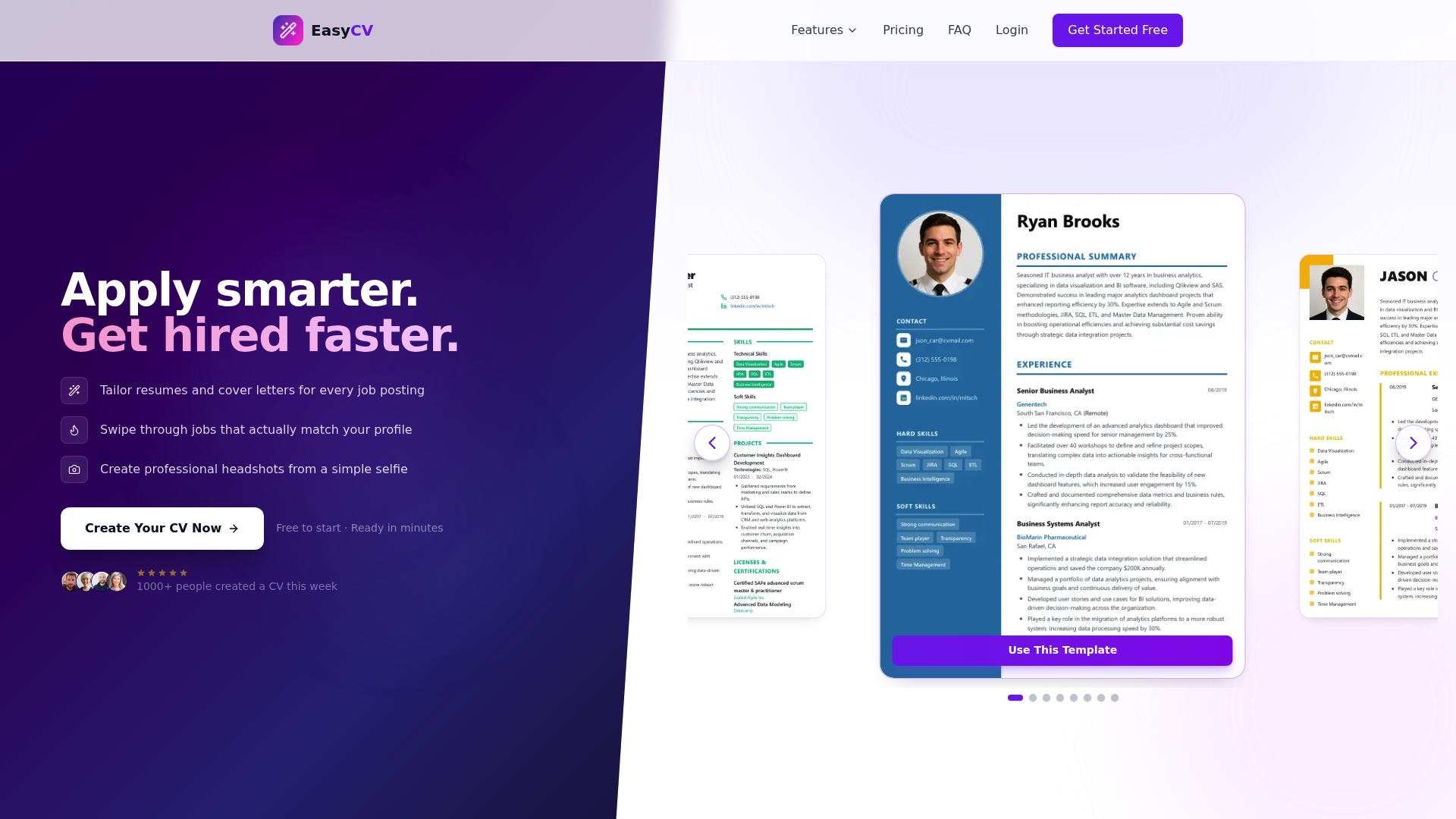
A swipe-based job matcher scores each listing against your resume before you commit to applying, which cuts down on wasted submissions to roles that were never a real fit. You can start on the free tier to see how the tracker and matcher work together, or head straight to the job matcher to start swiping through pre-scored roles today. If you’re applying across multiple countries, the CV translator keeps formatting intact so the version linked to each application stays consistent.
Templates and Tools Worth Bookmarking
Start with whichever fits your current volume, then adjust once you see how you actually use it.
- Google Sheets tracker template with pre-built columns and follow-up formulas
- Notion database and Kanban templates for visual pipeline management
- Open-source tracker project with browser-extension capture and CSV export
- Follow-up email timing and templates to avoid the two biggest timing mistakes