The Role of Networking in Job Search Success
Networking is the single most reliable path to employment, with 84% of US job seekers calling it essential and 92% of hiring managers agreeing it improves hiring chances. The role of networking in job search goes far beyond collecting business cards or sending LinkedIn requests. It creates direct access to referrals, insider information, and decision makers who never post their best openings publicly. Networking led to 39% of job seekers receiving a referral, 32% receiving a job offer, and 36% landing an interview. Those numbers make a clear case: formal applications alone leave most opportunities on the table.
How does networking improve your chances in the job search?
Networking gives you access to opportunities that job boards never show. A large share of positions get filled through personal referrals before a public listing ever goes live. When a hiring manager already knows your name, your application skips the pile and lands in a conversation.
The numbers back this up. Referral sources lead to far higher hiring rates than cold applications. That gap exists because a referral carries social proof. The person recommending you is staking their own reputation, which signals to the hiring manager that you are worth their time.

Networking also helps you bypass automated screening systems. Most large employers run applications through applicant tracking software before a human ever reads them. A personal endorsement from someone inside the company pulls your resume out of that filter entirely.
Jobs found through personal contacts are better in terms of satisfaction, prestige, and wages compared to jobs found through cold applications. That finding matters because it reframes networking not just as a tactic for getting hired, but as a tool for getting hired well.
- Access to the hidden job market: Many roles are filled internally or through referrals before any public posting appears.
- Higher interview conversion: A warm introduction from a mutual contact converts to an interview far more often than a cold application.
- Direct line to decision makers: Networking puts you in front of the people who actually make hiring decisions, not just HR gatekeepers.
- Better job quality: Network referrals help job seekers find roles that align more closely with their skills and preferences.
- Faster hiring timelines: Referred candidates typically move through the hiring process more quickly than applicants from job boards.
Pro Tip: When you reach out to a contact at a company you want to join, ask for a 20-minute informational interview rather than asking directly about job openings. This approach feels lower stakes for both parties and often leads to a referral organically.
What are the best networking strategies for employment?
Career experts recommend spending roughly 60% of job search time networking and 40% on formal job board applications. That ratio surprises most job seekers who default to spending hours on job boards while treating networking as an afterthought. Flipping that balance is one of the fastest ways to improve your results.
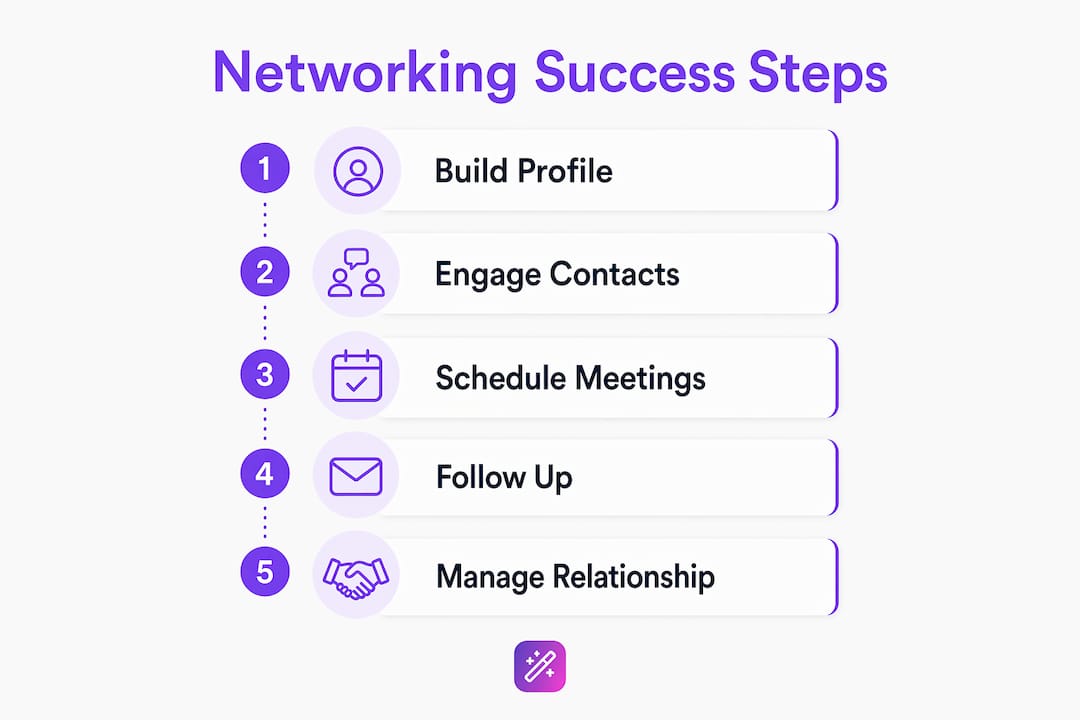
The most effective networking strategies combine digital outreach with in-person engagement. Neither alone is enough. LinkedIn gives you reach and searchability. In-person events give you the kind of rapport that a message thread cannot replicate.
Here is a practical breakdown of the four core networking methods:
- LinkedIn outreach: Optimize your profile with a keyword-rich headline, a professional photo, and a clear summary. Then engage actively by commenting on posts, joining industry groups, and sharing relevant content. Passive profiles get ignored.
- Informational interviews: Request short conversations with people in roles or companies you want to learn about. These meetings build relationships without the pressure of a formal job application.
- Industry events and conferences: Attend with a specific goal, such as meeting three new people or learning about a particular company. Research attendees in advance when possible.
- Direct outreach on social media: Platforms beyond LinkedIn can open doors, especially in creative and digital fields. A guide to direct outreach for social media roles shows how targeted messaging on the right platform can generate real responses.
Quality beats quantity in every case. Personalized outreach of 5–10 contacts per week increases reply rates from 5% to 40%. Mass messaging does the opposite. A generic “I’d love to connect” message gets deleted. A message that references a specific article the person wrote or a project they led gets a reply.
| Method | Best for | Time investment |
|---|---|---|
| LinkedIn engagement | Broad visibility, recruiter contact | Daily, 15–20 minutes |
| Informational interviews | Deep relationship building | 1–2 per week |
| Industry events | In-person rapport, local connections | Monthly or quarterly |
| Direct social outreach | Niche roles, creative industries | 5–10 targeted messages weekly |
Pro Tip: Block two specific time slots each week for networking outreach. Treating it like a scheduled meeting prevents it from getting crowded out by job board scrolling.
What challenges do job seekers face when networking?
The biggest barrier to effective networking is not introversion. It is confusion. 59% of job seekers do not know the best places to network in their field, and 44% say they lack the skills to make networking work. Knowing networking matters and knowing how to do it are two very different things.
51% of Gen Z workers feel especially underprepared for networking. That gap is partly generational. Younger job seekers grew up with digital communication but often lack practice in the kind of deliberate, relationship-focused outreach that professional networking requires.
The most common mistakes job seekers make when networking:
- Leading with the ask: Reaching out only when you need something signals that the relationship is purely transactional. Contacts notice this and disengage.
- Sending generic messages: A copy-paste message tells the recipient they are not worth your time. Personalization is the minimum bar for a response.
- Neglecting follow-up: Meeting someone once and never following up wastes the connection entirely. Relationships require maintenance.
- Focusing on volume over depth: Connecting with 200 people superficially produces worse results than building 20 genuine relationships.
Effective networking builds genuine two-way relationships, not a contact list. The mindset shift is from “what can I get?” to “what can I offer?” Sharing a useful article, making an introduction, or congratulating someone on a promotion costs nothing and builds real goodwill.
Pro Tip: Before sending any networking message, ask yourself: “Would I respond to this if I received it?” If the answer is no, rewrite it until it passes that test.
How to network effectively in digital and in-person environments?
A strong LinkedIn profile is the foundation of digital networking. Your headline should describe what you do and who you help, not just your job title. A profile with a professional photo, a custom URL, and a keyword-rich summary gets found by recruiters. A blank or outdated profile gets ignored.
Active engagement in LinkedIn groups and commenting builds credibility beyond your direct connections. When you consistently add thoughtful comments to industry conversations, people start to recognize your name before you ever send them a message. That recognition makes your eventual outreach far warmer.
For in-person events, preparation separates the people who leave with new contacts from those who leave with a stack of cards they never use. Research the attendee list or speaker lineup in advance. Set a specific goal for the event. Ask open-ended questions that invite the other person to talk about their work and challenges. People remember conversations where they felt heard.
Follow up within 48 hours via email or LinkedIn after meeting someone in person. Reference something specific from your conversation. This single step separates job seekers who build lasting connections from those who collect contacts and never hear from them again.
Consistent relationship management is what turns a network into a real asset. Check in periodically, congratulate contacts on promotions or new roles, and share content that is genuinely relevant to their work. These small, regular touches keep you present in someone’s mind without feeling intrusive.
Pro Tip: Use a simple spreadsheet or the notes feature in your phone to track who you have contacted, when, and what you discussed. This prevents the awkward situation of reaching out to the same person twice with the same message.
Key Takeaways
Networking is the most direct path to referrals, better job quality, and higher hiring rates, making it the core activity of any serious job search strategy.
| Point | Details |
|---|---|
| Networking drives referrals | 39% of job seekers received a referral through networking, leading to 32% receiving a job offer. |
| Time allocation matters | Spend roughly 60% of job search time networking and 40% on formal job board applications. |
| Personalized outreach works | Sending 5–10 tailored messages per week raises reply rates from 5% to 40%. |
| Quality beats quantity | Building 20 genuine relationships outperforms connecting with hundreds of contacts superficially. |
| Follow-up closes the loop | Reaching out within 48 hours of meeting someone is the step most job seekers skip and most regret. |
Networking in 2026: what I have actually seen work
The advice to “just network more” is nearly useless without a framework. What I have observed over years of watching job seekers succeed and fail is that the ones who treat networking as a long-term practice, not a crisis response, consistently outperform those who only reach out when they are desperate.
The biggest mindset shift I would push for is this: start networking before you need a job. The contacts you build while you are employed, curious, and not under pressure are the ones who will actually go to bat for you when a role opens up. Desperation is readable in a message, and it makes people uncomfortable.
I have also noticed that job seekers underestimate the value of weak ties. Your close friends and former colleagues already know the same people you do. The acquaintance you met once at a conference, the former professor, the person whose newsletter you have followed for two years: these are the connections that open genuinely new doors. Research on social networks has long supported this, and it holds up in practice.
For career changers specifically, networking is not optional. Your resume will not explain your pivot as well as a conversation will. A 15-minute call where you articulate why you are making the change and what you bring from your previous field is worth more than 50 applications. Pair that conversation with a well-crafted application through a platform like Easy-cv and you cover both the human and the automated sides of the hiring process.
The job market in 2026 rewards people who combine genuine human connection with efficient use of technology. Neither alone is enough.
— Andras
How Easy-cv supports your networking and job search
Networking opens doors. Your application has to walk through them. Easy-cv gives you the tools to make sure your resume and cover letter are ready the moment an opportunity appears.
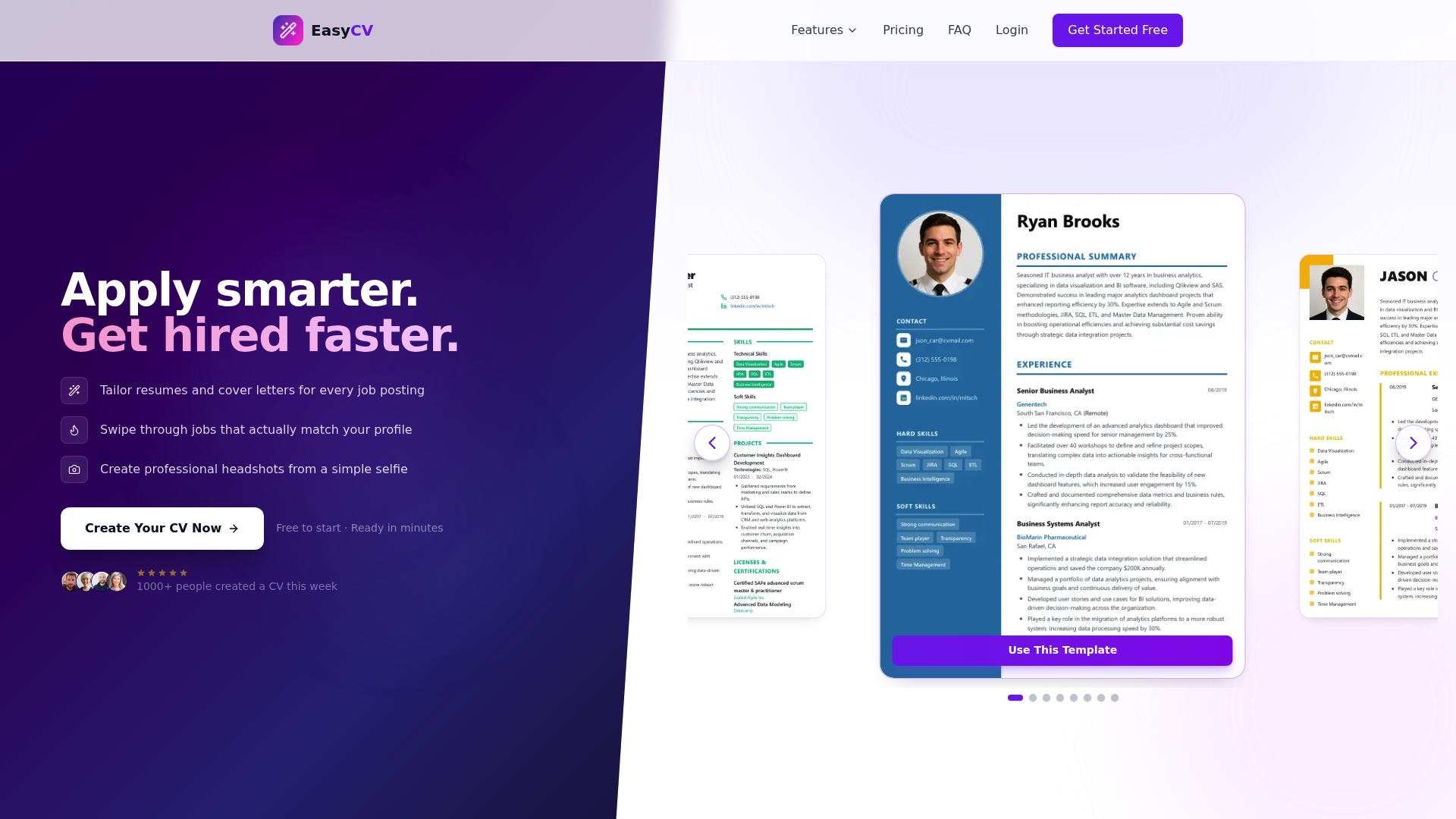
Easy-cv’s AI CV builder generates tailored resumes and cover letters for each role, so your application matches the specific language and requirements of every position your network surfaces. The platform aggregates over 10 million job opportunities per month, and the Job Matcher tool pre-scores listings against your profile so you can focus your outreach on the roles most worth pursuing. When a contact refers you to a company, you show up with a polished, targeted application rather than a generic one. That combination of human connection and precise documentation is what gets people hired.
FAQ
What percentage of jobs are found through networking?
Networking led to 32% of job offers and 39% of referrals among US job seekers. Many positions are filled through personal connections before a public listing ever appears.
How much time should I spend networking vs. applying to jobs?
Career experts recommend spending 60% of your search time on networking and 40% on formal job board applications. Most job seekers do the opposite, which explains why their results plateau.
How do I start networking if I have no connections?
Start with informational interviews by reaching out to people in roles you want to learn about. Engaging in LinkedIn groups and commenting on industry content builds visibility before you ever send a direct message.
Is networking harder for introverts?
Networking is not about extroversion. It is about building purposeful, genuine relationships that add value over time. Introverts often excel at the one-on-one conversations and deep listening that make networking most effective.
What is the biggest networking mistake job seekers make?
The most common mistake is leading with an immediate job ask. Effective networking builds two-way relationships first, which means offering value before making any request.