AI in Job Hunting 2026: Your Complete Strategy Guide
AI in job hunting 2026 is defined as the systematic use of machine learning tools across every stage of the job search, from resume creation to interview preparation, to increase your chances of getting hired. Job seekers using AI tools during their search get twice as many offers as those who don’t. That single fact changes how you should think about every application you send. The key is treating AI as a co-pilot, not an autopilot. Your authentic voice still wins the job. AI just gets you in the room.
1. How AI in job hunting 2026 reshapes resume screening
Automated resume screening is the first filter every application faces. AI-powered screening can process and rank 500 resumes in under 2 minutes, assigning match scores from 0 to 100. Recruiters prioritize candidates with scores of 70 or above for interviews. That means your resume must score well before a human ever reads it.

Modern applicant tracking systems use semantic matching, not just keyword counting. High-quality AI screeners evaluate your actual career trajectory and impact, rejecting keyword gaming attempts automatically. Stuffing your resume with buzzwords backfires because the algorithm reads context, not just terms.
The right approach is to use AI as an editor of your own draft, not as the author. Start with your real experience, then use an AI writing assistant to sharpen the language, align terminology with the job description, and surface achievements you may have undersold. This produces a resume that passes automated screening and reads as genuinely human.
- Match your resume language to the exact wording in each job posting
- Quantify achievements with numbers wherever possible (“increased sales by 30%” beats “improved sales”)
- Use standard section headings (Experience, Education, Skills) so ATS parsers read your file correctly
- Save your file as a plain PDF or Word document unless the posting specifies otherwise
Pro Tip: After running your resume through an AI tool, add at least two specific metrics or accomplishments that the AI could not have invented. Those details are what a recruiter remembers.
For a deeper look at how to build a resume that clears both AI and human review, the AI resume builder guide from Easy-cv walks through the full process step by step.
2. Top AI tools for job search and real-time job matching
The artificial intelligence job search landscape in 2026 has moved well beyond simple job boards. ChatGPT’s live job search feature pulls real-time listings from Indeed, Upwork, and Appcast, matching roles to your background through a single conversational interface. That collapses the multi-tab job hunt into one workflow. You describe your experience, and the tool surfaces relevant roles instantly.
Geographic availability matters. ChatGPT’s job search feature is currently US-only, but the integrated resume builder works worldwide in English. Candidates outside the US can still use it to build and tailor resumes in-chat, then apply through their local job boards.
The most effective approach combines real-time job matching with tailored application materials. When a tool surfaces a role, you want to customize your resume for that specific posting before you apply. Platforms that handle both steps in one place save the most time.
Key features to look for in an AI job search platform:
- Real-time aggregation from multiple job boards so you see new listings within minutes
- AI evaluation of each role against your profile, not just keyword matching
- Built-in resume and cover letter tailoring tied directly to the job description
- A tracking system to log applications, follow-ups, and interview stages
Easy-cv aggregates over 10 million job opportunities per month and pairs each listing with AI-tailored resume and cover letter generation. The job matching guide from Easy-cv explains how to use role-matching features to cut your search time significantly.
3. Using AI to prepare for technical assessments and interviews
Technical assessments are the biggest elimination point in most hiring funnels. AI practice tools significantly raise pass rates by simulating multiple-choice questions, coding challenges, and proctored test environments before you face the real thing. Passing this stage is where most candidates fail, and preparation is the only reliable fix.
AI chatbots and dedicated practice platforms now cover the full range of assessment types. For coding roles, tools simulate timed challenges in specific languages. For business and operations roles, they generate aptitude and situational judgment tests. For system design interviews, AI can walk you through architecture questions and critique your answers in real time.
Behavioral interview preparation has also changed. AI interview simulators let you practice answers to common questions, then analyze your responses for clarity, relevance, and conciseness. Some platforms offer human mock interview sessions alongside AI practice, which adds the social pressure that a chatbot cannot replicate.
- Use AI to identify the most common assessment formats for your target role and industry
- Practice under timed conditions from day one, not just the week before an interview
- Record your mock interview answers and review them for filler words and vague claims
- Research the company’s specific interview process on forums and professional networks before you practice
Pro Tip: AI practice builds technical confidence, but your final preparation should include at least one session with a real person. Recruiters notice the difference between someone who rehearsed with a machine and someone who has had real conversations.
The AI recruitment trends in 2026 show that companies are investing heavily in assessment technology, which means candidates who skip this preparation stage face a steeper climb.
4. Balancing AI support with authentic communication
Recruiters detect and reject AI-generic applications. Keyword stuffing and impersonal content lead to automatic disqualification at the screening stage and skepticism from human reviewers at every stage after. The problem is not using AI. The problem is letting AI replace your voice entirely.
The top job seekers in 2026 treat AI as a co-pilot for research, drafting, and keyword identification, while keeping personal responsibility for every claim they make. AI does not replace human connection or self-reflection. It handles the mechanical work so you can focus on the parts only you can do.
Networking is the clearest example. AI can research a company’s culture, recent news, and leadership priorities in minutes. It can draft a professional outreach message. But the relationship you build with a hiring manager or a mutual contact depends entirely on your follow-through, your genuine curiosity, and your ability to hold a real conversation.
- Use AI to research company values and recent news before writing any outreach message
- Draft your message with AI, then rewrite the opening and closing in your own words
- Reference something specific about the company that shows you actually paid attention
- Follow up personally after any AI-assisted application or networking message
AI supports research and drafting, but human effort remains the deciding factor in authentic networking and final interviews. The candidates who win offers in 2026 are the ones who use AI to prepare better, not to communicate less.
49% of business leaders say adapting hiring strategies to AI realities is a top priority. That shift means companies are actively looking for candidates who understand how to work alongside AI, not just candidates who use it to generate applications.
Key Takeaways
The most effective approach to AI in job hunting 2026 combines machine precision for screening and preparation with your authentic voice for networking and final interviews.
| Point | Details |
|---|---|
| AI doubles your offer rate | Job seekers using AI tools receive twice as many offers as those who don’t. |
| Score 70+ on ATS screening | AI screeners rank resumes 0–100; recruiters interview candidates who score 70 or above. |
| Practice assessments with AI | Simulating coding, MCQ, and behavioral tests before interviews raises your pass rate. |
| Keep your voice in every application | AI-generic content gets rejected; use AI to edit your drafts, not replace them. |
| Combine tools in one workflow | Platforms that handle job matching, resume tailoring, and tracking together save the most time. |
My honest read on AI and the 2026 job search
I’ve watched the job search process change faster in the past two years than in the previous decade. The candidates I see struggling are not the ones who refuse to use AI. They are the ones who use it too much and too passively.
The pattern looks like this: someone pastes a job description into an AI tool, generates a resume and cover letter in 30 seconds, and sends it. The output is technically correct and completely forgettable. Recruiters who read 200 applications a day recognize that voice immediately. It reads like everyone else’s application because it was written by the same underlying model.
The candidates who stand out do something different. They use AI to identify gaps between their experience and the job requirements. They use it to sharpen language they already wrote. They use it to practice answers to interview questions they find genuinely difficult. Then they show up to the interview as themselves, not as a polished AI output.
The future of hiring will involve more AI on both sides of the table. Companies are using machine learning to screen, score, and rank candidates at scale. The response is not to fight that with more AI on your end. The response is to give the AI screener what it needs to rank you highly, then give the human interviewer something the algorithm cannot evaluate: a real person with a clear story and genuine enthusiasm for the work.
Use AI to get in the room. Be yourself once you’re there.
— Andras
How Easy-cv fits into your 2026 job search
Easy-cv brings the full job search workflow into one place, which matters when you are applying to multiple roles and tailoring each application.
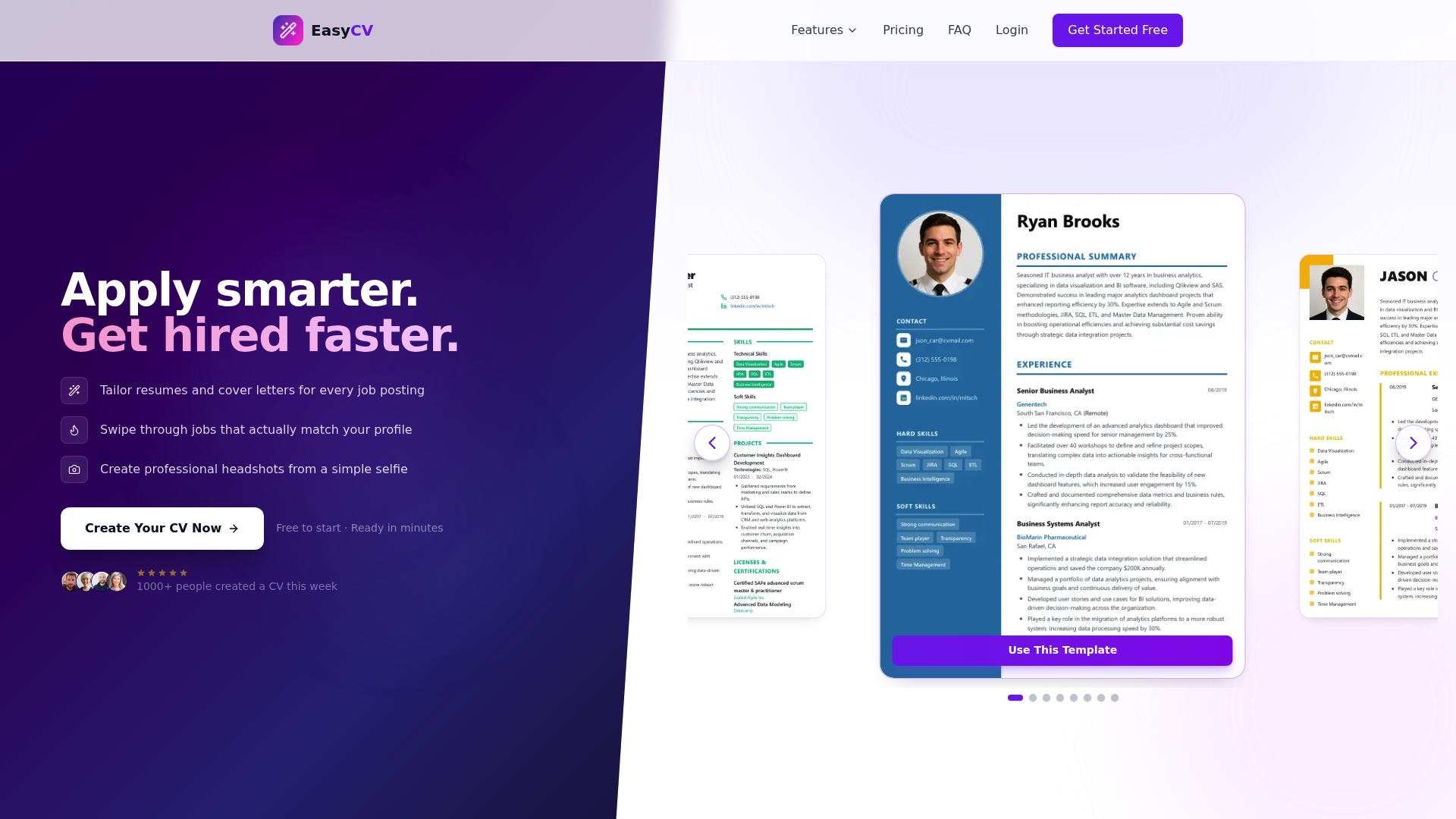
The platform aggregates over 10 million job listings per month, with new postings available within minutes of going live. Its AI writing assistant generates and refines resume content and cover letters tied directly to each job description, so every application reflects the specific role. The AI CV builder also includes an ATS-friendly template library, a headshot generator, and support for 30+ languages. For job seekers who want a structured, efficient process without the manual back-and-forth, Easy-cv’s full feature set covers every stage from discovery to application.
FAQ
How does AI improve your chances in a job search?
Job seekers using AI tools receive twice as many offers as those who don’t. AI improves resume relevance, speeds up tailoring, and helps candidates prepare for assessments and interviews more thoroughly.
What is automated resume screening and how does it work?
Automated resume screening uses machine learning to score resumes from 0 to 100 based on how well they match a job description. Recruiters typically interview candidates who score 70 or above, so matching your language to the job posting is critical.
Will recruiters know if I used AI to write my resume?
Recruiters recognize AI-generic content and often reject it. The safest approach is to write your own draft first, then use AI to refine the language and align it with the job description, keeping your specific achievements and voice intact.
What AI tools help with interview preparation?
AI practice platforms simulate coding challenges, multiple-choice aptitude tests, and behavioral interview questions. Pairing AI simulation with at least one real mock interview session gives you both technical readiness and the social confidence that only human practice builds.
Is AI job search technology available outside the United States?
Some features, like ChatGPT’s live job search, are currently US-only. However, AI resume builders and cover letter tools work globally, and platforms like Easy-cv support applications in 30+ languages for job seekers worldwide.