For HR and Job Seekers: 4 Glassdoor Alternatives by Strength
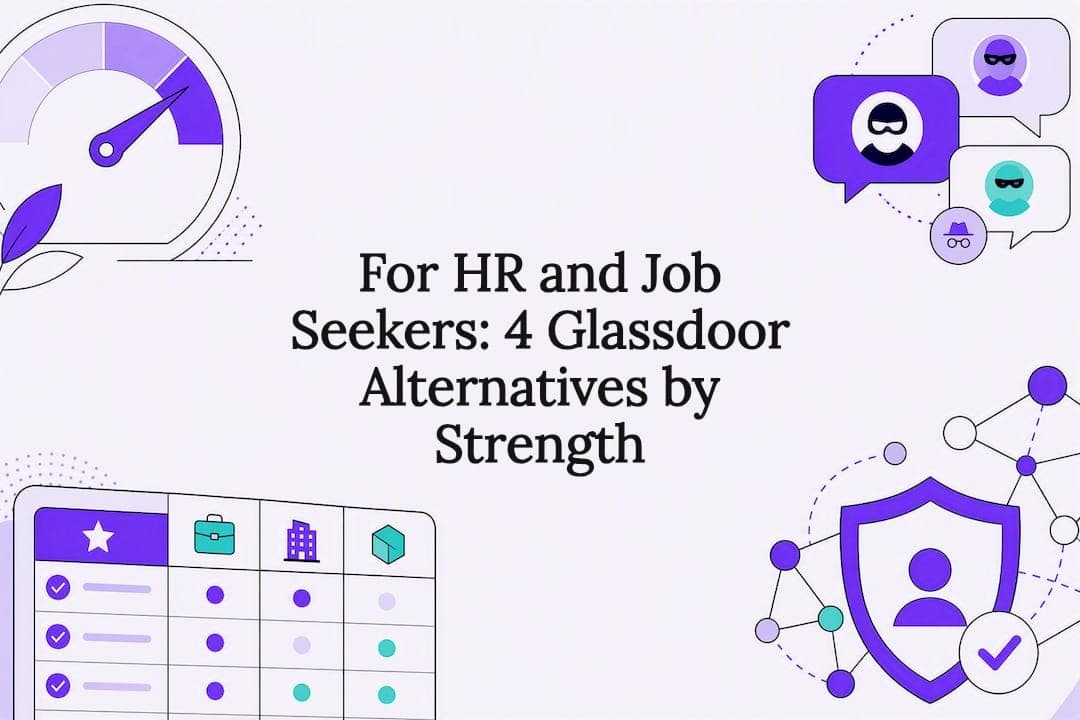
The strongest Glassdoor alternatives split into four lanes: salary transparency, led by Levels.fyi and the open-access Ratelys; anonymous insider talk, dominated by Blind (TeamBlind); employer-branding and culture metrics, best covered by Comparably and Built In; and niche or demographic research, where Fairygodboss and InHerSight lead. Compensation candidates want the first, HR auditors want the third, and applicants prioritizing inclusion want the fourth.
TL;DR:
- Salary transparency platforms like Levels.fyi and Ratelys provide detailed, level-by-level pay data without paywalls, aiding accurate compensation comparisons.
- Anonymous communities such as Blind verify users through work emails, offering candid insights but excluding ex-employees and outsiders for trust reasons.
- Employer-branding sites like Comparably focus on structured culture and leadership metrics, which HR teams use to benchmark and identify company blind spots.
- Niche platforms like Fairygodboss and InHerSight highlight demographic-specific workplace experiences, especially around gender inclusion and policies.
- Due to privacy policy shifts, relying solely on anonymous sources may impact data trust, so cross-verifying with multiple platforms and checking review timings is essential before acting.
Table of Contents
- Which Sites Like Glassdoor Should You Actually Check?
- When Should You Use Each Category of Employer Review Site?
- What Do the Major Glassdoor Competitors Actually Offer?
- How Do You Choose the Right Platform for Your Situation?
- Are These Platforms’ Privacy and Data Policies Changing?
- How EasyCV Fits After You’ve Done the Research
- Ready to Apply to the Employers You’ve Vetted?
- Where to Verify These Platforms Yourself
- Sources
Which Sites Like Glassdoor Should You Actually Check?
Picking among job review sites gets easier once you stop hunting for one platform to replace Glassdoor outright. Each category below answers a different question, and the fastest researchers pull from at least two.
| Category | Best for | Primary data type | Verification / access | Employer-branding utility | Paywall |
|---|---|---|---|---|---|
| Salary transparency | Comp benchmarking | Structured pay data | Open (Ratelys) or crowd-submitted (Levels.fyi) | Low | None on either |
| Anonymous communities | Candid insider context | Unstructured discussion threads | Work-email verified | Moderate (risk management) | Free, verification required |
| Employer-branding platforms | Culture and leadership metrics | Structured scores plus reviews | Give-to-get or employer-claimed profiles | High | Partial, some data gated |
| Niche/demographic sites | Inclusion-focused research | Reviews plus policy data | Give-to-get | Moderate | Partial |
Levels.fyi breaks down base, bonus, and equity by level, which no generalist review site matches for tech roles. Ratelys mirrors that transparency for interview experiences and salaries without a submission wall. Blind’s verification model trades broad access for higher trust in what gets said. Comparably and Built In turn fuzzy “culture” into scored dimensions HR can actually track quarter over quarter.
When Should You Use Each Category of Employer Review Site?
Salary sites answer one question well: what does this role actually pay? Levels.fyi’s level-by-level tech breakdowns give recruiters and candidates a shared reference point that a five-star review can’t. Ratelys covers similar ground with zero account friction, which matters if you want a fast number and nothing else.
Anonymous communities answer a different question: what’s it really like once the offer letter is signed? Blind requires a work email, which filters out much of the noise you’d find on an open forum but also excludes ex-employees and outsiders who might have relevant context.
Employer-branding platforms answer a third question, the one HR teams care about most: how does our reputation compare to named competitors, dimension by dimension? For a detailed look at leadership assessment and blind spots in this space, consider the Leadership Blind Spot Assessment for Clearer Growth. Comparably’s structured metrics on diversity, leadership, and CEO approval give talent teams something a text review never will: a number to move next quarter.
Niche and demographic sites answer a fourth question specific to a group’s lived experience. Fairygodboss and InHerSight surface gender-specific workplace ratings that a generalist aggregate score buries.
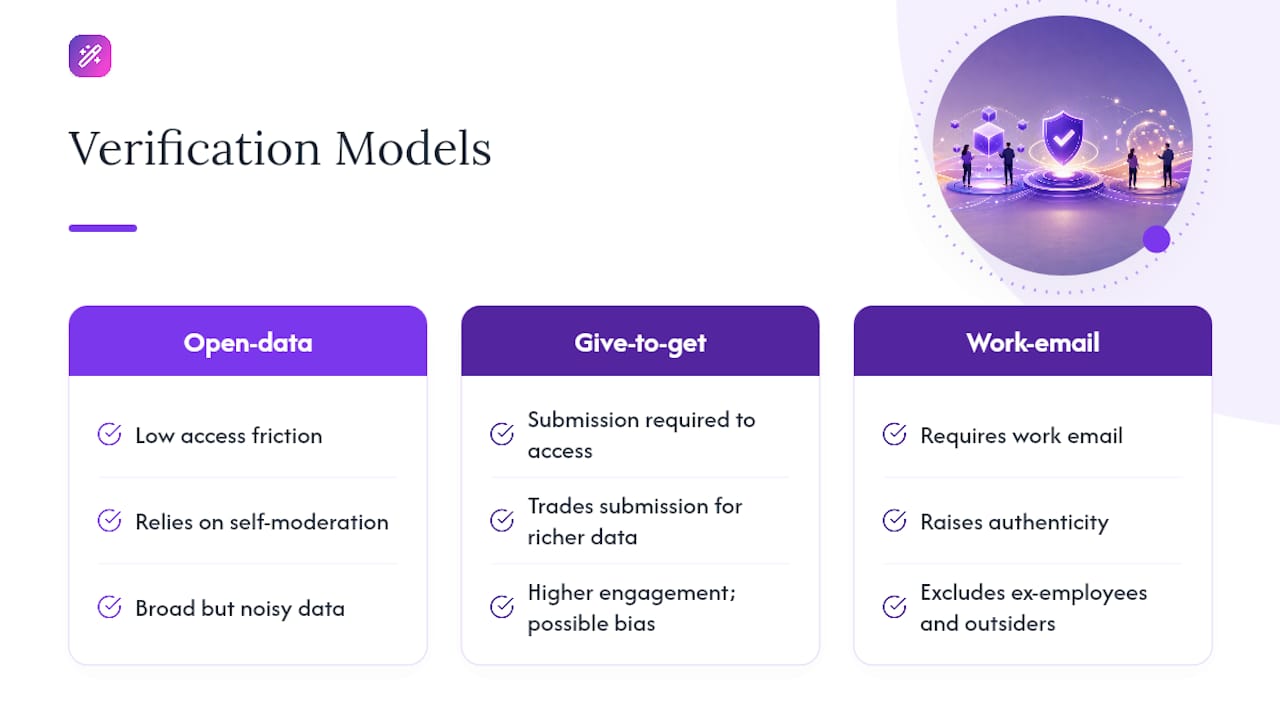
Verification models shape how much to trust each answer. Open-data sites remove friction but rely on self-moderation. Give-to-get platforms trade a submission requirement for supposedly richer datasets. Work-email verification raises authenticity at the cost of access.
Pro Tip: Never rely on one category alone. Pull a salary number from Levels.fyi or Ratelys, cross-check culture sentiment on Comparably, then scan Blind for anything that contradicts the polished version. Three data points from three different verification models beat one glowing profile.
What Do the Major Glassdoor Competitors Actually Offer?
Here’s a quick rundown of the platforms professionals name most often when the conversation turns to alternative job search sites and employer review platforms.
- Indeed company pages combine reviews, salary snapshots, and live listings in one place, useful for anyone who wants employer research and job hunting in the same tab.
- Comparably scores companies on structured culture dimensions, from CEO approval to diversity, which HR teams use to benchmark against named competitors.
- Blind (TeamBlind) verifies members through a work email, then lets them talk candidly inside company-specific channels.
- Fairygodboss centers women’s career research, publishing maternity-leave policies and community-sourced insight alongside standard reviews.
- InHerSight scores companies on factors women rate as priorities, from flexibility to management support.
- Levels.fyi publishes granular, level-by-level tech compensation data pulled from user submissions.
- LinkedIn company pages show official employer storytelling through the Life tab, paired with employee profiles and open roles.
- The Muse leans into multimedia: office tours, staff interviews, and curated advice content instead of raw star ratings.
- Ratelys offers salary and interview data with no account wall, positioning itself as the open alternative to give-to-get models.
- Built In focuses on tech and product organizations, spotlighting perks and stacks for specific metro tech scenes.
A few other names round out most alternatives roundups worth knowing by name: Vault, AmbitionBox, kununu, Welcome to the Jungle, Seek, HandShake, Hired, Great Place to Work, RepVue, CareerBliss, and ZipRecruiter. Each leans toward a specific region, industry, or hiring stage rather than trying to cover everything Glassdoor does.
How Do You Choose the Right Platform for Your Situation?
Run through this checklist before trusting any single source: research goal (pay versus culture versus reputation), sample size, recency of reviews, verification method, data granularity, and whether the employer can edit or suppress content.
A workable three-step workflow:
- Scan broad. Start with one generalist source (Indeed company pages or LinkedIn) plus one salary specialist (Levels.fyi or Ratelys) for a baseline.
- Go deep. Move to a niche or anonymous platform, Blind for candid context, Fairygodboss or InHerSight if demographic fit matters, to test whether the baseline holds up.
- Cross-verify. Check two structured-metrics sources like Comparably and Built In against each other; agreement across independent scoring systems is worth more than either alone.
If you’re building this into a hiring workflow, our job search platform strategy guide walks through combining generalist and specialist sources in more detail.
Before trusting a vendor’s employer-branding pitch, ask three questions: where does the underlying data come from, what’s the moderation policy for flagged or disputed reviews, and how often does the dataset refresh?
Pro Tip: A sudden spike of five-star reviews in a short window, especially right after a scandal broke elsewhere, is the clearest manipulation signal. Check review dates before trusting an aggregate score.
Are These Platforms’ Privacy and Data Policies Changing?
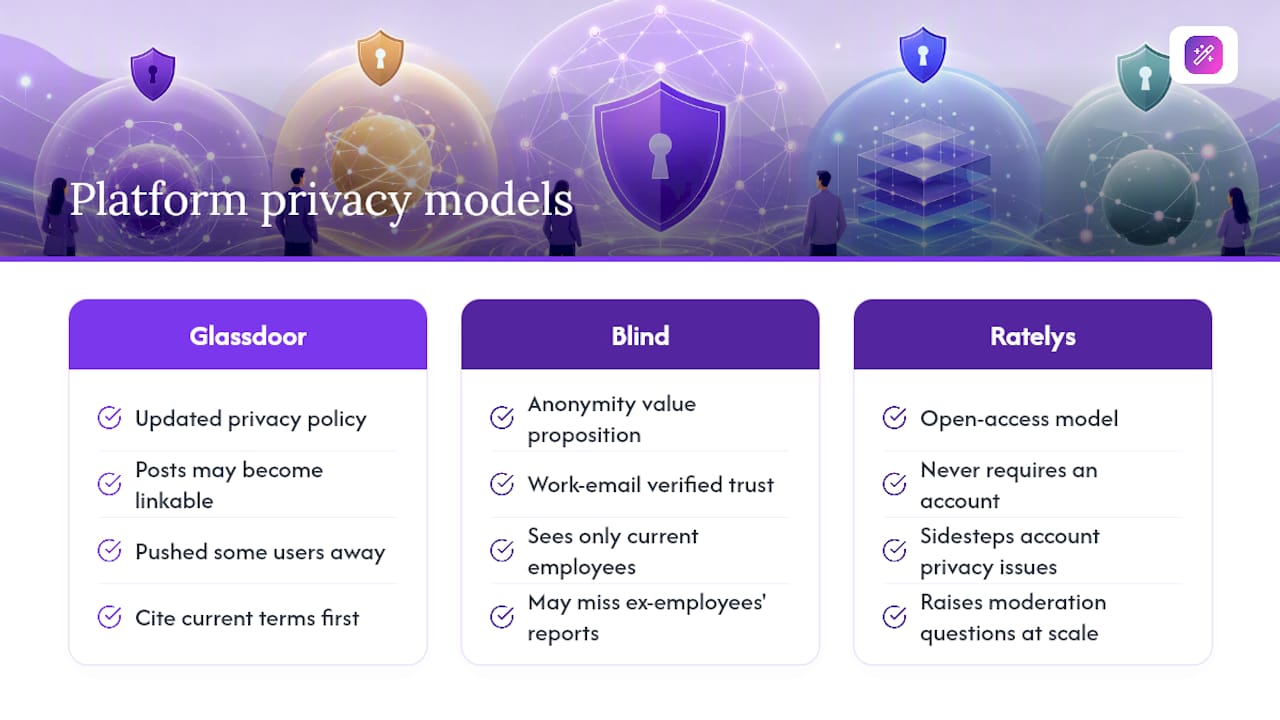
Anonymity is the whole value proposition for platforms like Blind, and that’s exactly what got tested recently. NPR reported in 2024 that Glassdoor’s updated privacy policy raised fears that posts once treated as anonymous could become linkable to real identities, a shift that pushed some users toward independent or anonymous-first platforms instead.
That migration has a direct effect on data reliability. Work-email-verified apps like Blind gain trust exactly because they don’t ask for the kind of linkable profile data Glassdoor does, but that verification model also means the platform sees only current employees, missing anyone who left before an issue became public. Open-access sites like Ratelys sidestep the privacy question by never requiring an account in the first place, though that openness raises separate questions about moderation at scale.
For HR teams, the practical takeaway is to treat any single platform’s policy terms as a moving target. A site’s data-retention and identity-protection policy today may not match what it published a year ago, so revisit each platform’s current terms before citing its reviews in an internal report, and weigh independent coverage like NPR’s alongside the platform’s own claims.
How EasyCV Fits After You’ve Done the Research
Once you’ve picked an employer using Comparably scores, Blind threads, or a Levels.fyi number, the work shifts from research to application. The platform aggregates listings from job boards, tailors your CV and cover letter with AI for each posting, and matches you to roles worth pursuing. That’s the moment to stop researching and start applying, before a strong opening closes.
— Andras
Ready to Apply to the Employers You’ve Vetted?
You’ve done the hard part: cross-checked salary data, read the anonymous threads, and scored the culture metrics that matter to you. EasyCV picks up right where that research ends, turning a shortlist of vetted employers into tailored applications without the manual rewrite for every posting.
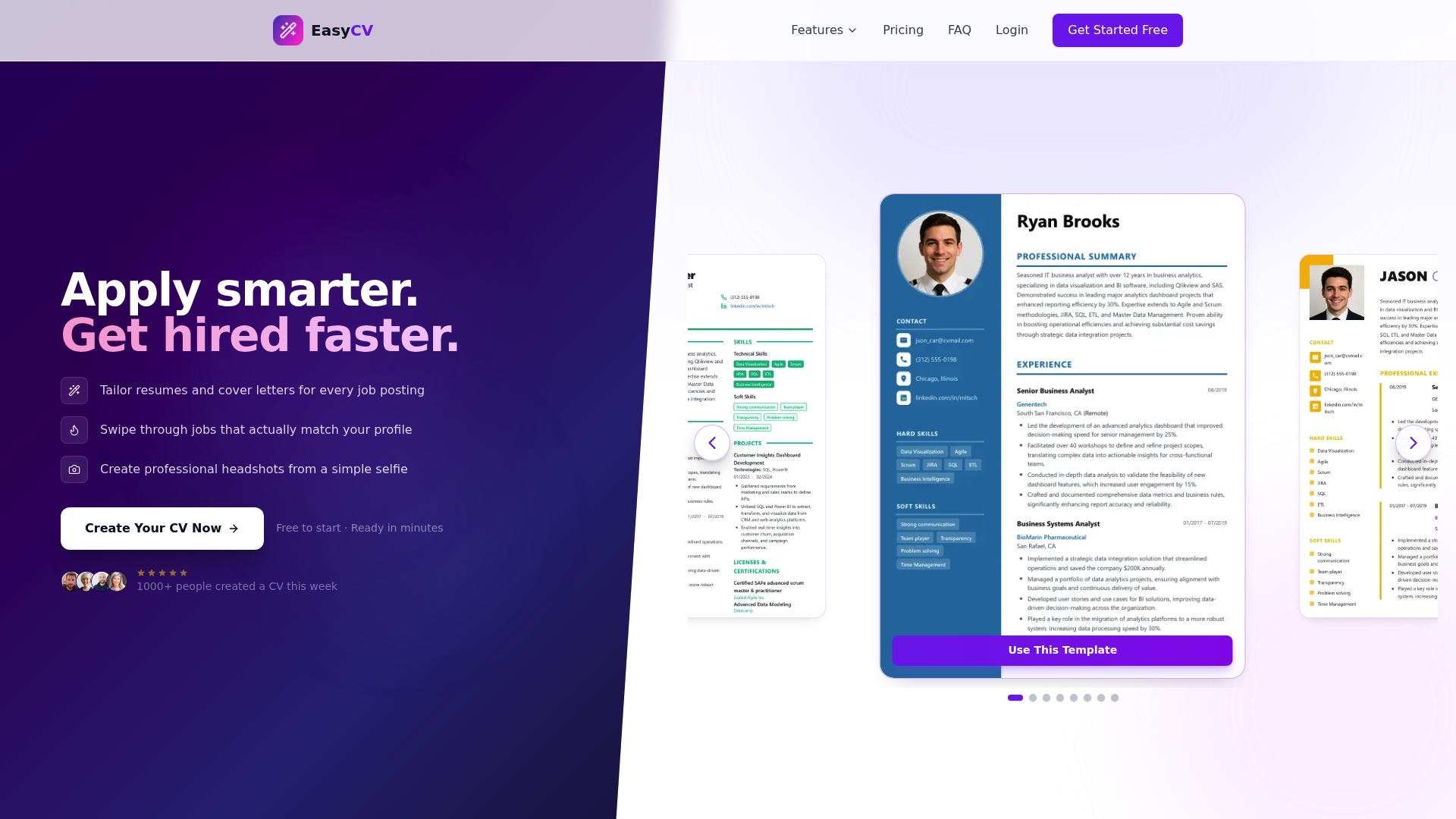
The job matcher swipes through roles pre-scored against your CV, so you spend time on employers you already trust rather than scrolling listings cold. It can be paired with an AI writing assistant to adjust your CV and cover letter for each application, pulling from aggregated boards you might otherwise check one by one. If you’re applying across borders, the CV translator handles that in over 30 languages without mangling formatting. Start with the job matcher and see which of your researched employers show up first.
Where to Verify These Platforms Yourself
For deeper reading: Levels.fyi’s compensation data for tech pay ranges, Ratelys for open-access salary and interview reports, InHerSight’s ratings for women-focused metrics, and Gartner’s alternatives list for a buyer’s-eye comparison framework.